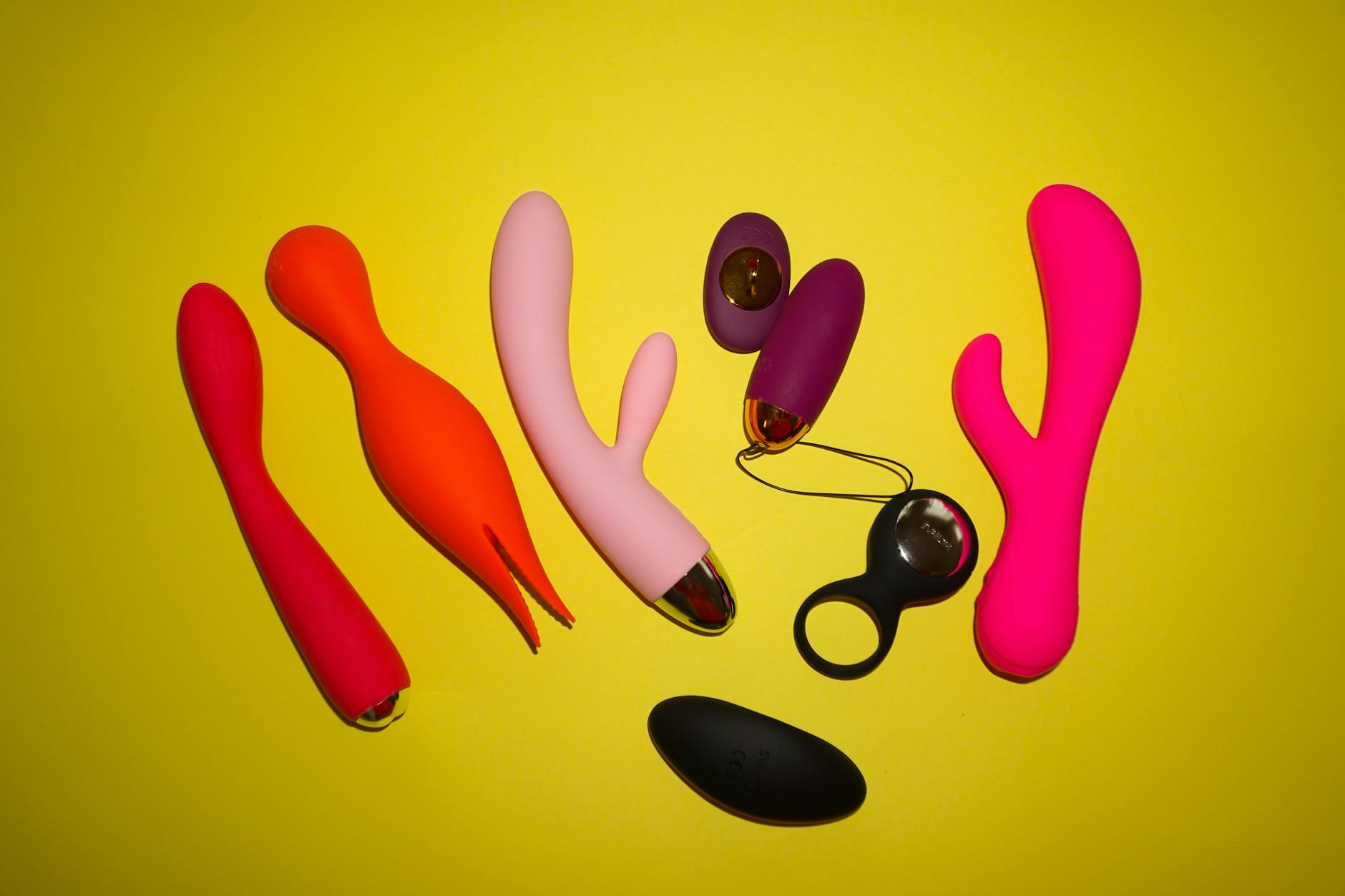
How to Use a Lemon Vibrator If You're Taking Antidepressants
SSRIs and SNRIs change how your body responds to pleasure. Here's why that happens, what you can do about it, and how lemon clitoral vibrators restore sensation in ways traditional toys often miss.
Here's what nobody tells you when your doctor prescribes an SSRI: it might save your mental health and wreck your orgasms at the same time. That's not hyperbole. It's not in your head. Sexual side effects from antidepressants are real, measurable, and affect between 40 and 60 percent of people taking them, depending on the specific medication and dose.
The irony is brutal. You're finally feeling like yourself again, your anxiety is quieter, your depression is managed, and then your body stops cooperating in the bedroom. Many people suffer silently because they think they're supposed to choose: mental health or sexual pleasure. You shouldn't have to.
Let me explain what's actually happening neurologically, and then I'll tell you why lemon vibrators are one of the most underrated solutions to this specific problem.
Antidepressants that increase serotonin (SSRIs like sertraline, paroxetine, fluoxetine, and SNRIs like venlafaxine) work by keeping serotonin in circulation longer in your brain. Serotonin is good for mood. But here's the part your doctor might not emphasize: serotonin inhibits dopamine and norepinephrine in the pathways that drive sexual arousal and orgasm.
It's a trade off. More serotonin means more emotional stability and less anxiety. But those same neurochemical changes suppress the exact neurotransmitters that make arousal feel urgent and pleasure feel intense.
The dampening happens in three main ways. First, your baseline arousal drops. Sexual thoughts feel less compelling. Second, it takes longer to build physical arousal. Your body might not lubricate as easily or your erection might take longer to develop. Third, and most frustratingly for many people, orgasm becomes harder to reach, takes longer, or feels muted when it does arrive.
None of this means you're broken. It means your chemistry shifted, and you need a different approach to get the same result.
Most vibrators work through repetitive buzzing friction. They rely on the body's natural responsiveness building gradually under sustained stimulation. When you're on an SSRI, that natural responsiveness is already dampened. You're starting the race ten meters back.
You end up either buying a more powerful vibrator (which can numb the tissue over time) or spending 45 minutes waiting for an orgasm that might not arrive at all. Both are exhausting and demoralizing.
Lemon vibrators, specifically air-suction clitoral vibrators like the Lem, work on a completely different mechanism. Instead of friction, they use gentle pulsing suction that stimulates thousands of nerve endings across a wider surface area. The sensation is more diffuse, more varied, and crucially, it engages the nervous system in a way that traditional vibrators don't.
For people on antidepressants, this matters enormously. You're not relying on raw sensitivity to create pleasure. You're using intelligent stimulation that works with your current neurochemistry, not against it.
The Lem's suction mechanism creates a sealed micro-vacuum that pulses gently. It's not a vibration in the traditional sense. It's rhythmic pressure and release. For someone whose nervous system is dampened by serotonin, this creates what I think of as a "wake up call" for sensation.
Here's what that looks like in practice. Instead of needing direct, sustained friction to feel anything, you get varied stimulation that keeps your nervous system engaged and curious. The suction patterns create waves of sensation rather than a constant buzz, which means less numbing over time and more potential for variation.
Many of my clients on SSRIs tell me that lemon clitoral vibrators cut their time to orgasm in half compared to traditional vibrators. Some experience multi-orgasmic responses for the first time since starting medication. That's not because these toys are magically powerful. It's because they're neurologically efficient for medicated bodies.
If you're on an SSRI or SNRI and want to reclaim your sexual response, here's what I recommend.
First, timing matters. Take your antidepressant at the same time every day, ideally in the morning. This creates a predictable rhythm in your bloodstream. Many people notice that their sexual response is slightly better 12 to 14 hours after taking the dose, as levels fluctuate. You don't need to change your medication schedule, but knowing this pattern helps you plan intimacy intentionally rather than hoping it will spontaneously happen.
Second, extend your warm-up. Budget twice the time you think you need. No rushing. Your body isn't broken, it's just slower to activate. Light touching, teasing, building anticipation. Foreplay isn't a prelude. It's the main event now. Treat it that way.
Third, invest in a tool designed for your situation. A lemon sucker vibrator like the Lem creates different nerve firing patterns than traditional vibrators. Start on the lower settings and work up. You're learning your body's response under new neurochemical conditions. That takes exploration.
Fourth, reduce performance pressure ruthlessly. The hardest part of medicated sexuality isn't physical. It's psychological. You're worried you won't come. That worry creates tension, which makes coming harder. You end up chasing the orgasm instead of enjoying the sensations. Permission to feel good without an orgasm as the goal changes everything.
If sexual side effects are severe and persistent, don't just accept them. Talk to your prescriber. There are strategies. Some doctors add a low dose of bupropion (Wellbutrin), which works through dopamine and actually enhances sexual response, alongside your SSRI. Others adjust timing or dosage. Some people switch to medications with lower sexual side effect profiles, like bupropion or mirtazapine.
This isn't about sacrificing mental health for sexual pleasure. It's about finding the dose and combination that lets you have both. A good psychiatrist takes this seriously. If yours doesn't, that's information.
Here's something that gives me real hope when I'm working with people on antidepressants. Your body isn't permanently changed. The sexual dampening is a reversible side effect of the drug, not a reflection of your capacity for pleasure. If you ever adjust your medication, your baseline responsiveness returns. But while you're medicated, you can absolutely learn to access pleasure through smarter, more targeted stimulation.
A lemon vibrator isn't a workaround because you're broken. It's an upgrade because your nervous system has new parameters. When you use a tool that works within those parameters instead of fighting against them, pleasure becomes accessible again. That's not settling. That's problem solving.
Start with curiosity, not pressure. Use your lemon vibrator at a lower intensity than you think you need. Explore the different patterns slowly. Notice what creates sensation, not what's supposed to create sensation. Many people find that the slower, pulsing patterns work better than the faster ones. Some prefer short bursts over sustained suction. Your medicated body has preferences. Find them.
Set a boundary: if you're not feeling it after 15 to 20 minutes, stop. Pleasure is the goal, not the orgasm. You can feel genuinely satisfied without climaxing. The pressure to come while on antidepressants is probably the biggest barrier to reclaiming sexuality. Release that and everything shifts.
Finally, check in with your partner if you have one. This isn't a solo problem. Many couples struggle when one person starts medication and sexual response changes. The conversation shifts from "What's wrong with me?" to "Here's what works better now." That's actually an opportunity to deepen intimacy if you take it.
Some research suggests that maca root, ginseng, or higher doses of L-arginine might help slightly, but the evidence is weak and effects are modest. More reliable: sleep, stress reduction, exercise, and using the right tools. A lemon clitoral vibrator will do more for you than any supplement.
Completely normal, but be cautious. The more powerful the vibrator, the faster your tissue can numb to it. That's why varied stimulation patterns matter more than raw power. Air-suction lemon vibrators create variety without requiring extreme intensity, which is why they're often more sustainable long-term.
Yes, but frame it as information, not blame. "My body is responding differently because of my medication, and here's what actually helps" is very different from "I'm not attracted to you anymore." One opens a conversation. The other closes it. Your partner probably wants to understand and help.
Possibly, but only with your doctor's guidance. Some people find that taking their dose at night instead of morning, or spacing doses differently, creates a window where sexual response is slightly better. This only works for certain medications and only if your psychiatrist approves. Never adjust on your own.
For most people on SSRIs, yes. The air-suction mechanism engages the nervous system differently. It's more efficient neurologically. That said, everyone's different. Some people find that a combination approach works best. Explore and notice what your body actually responds to.
Sometimes. Some people experience slight improvement after a few months as their body adjusts. Others plateau. It depends on the medication, dose, and individual neurology. The good news is that solutions exist. You don't have to live with muted pleasure indefinitely.
Antidepressants are lifesaving medications. The sexual side effects are real and frustrating, but they're not permanent and they're not a reason to stop treatment. You deserve mental health and sexual pleasure. Those things aren't mutually exclusive. They just require intention, the right tools, and honest communication.
If you're on an SSRI or SNRI and your pleasure has flatlined, start here: timing, warm-up, and a lemon vibrator designed for medicated bodies. That combination changes almost everything. Your capacity for pleasure didn't disappear. It shifted. Meet it where it is now.
Have questions about integrating pleasure and medication? Reach out. That's what we're here for.