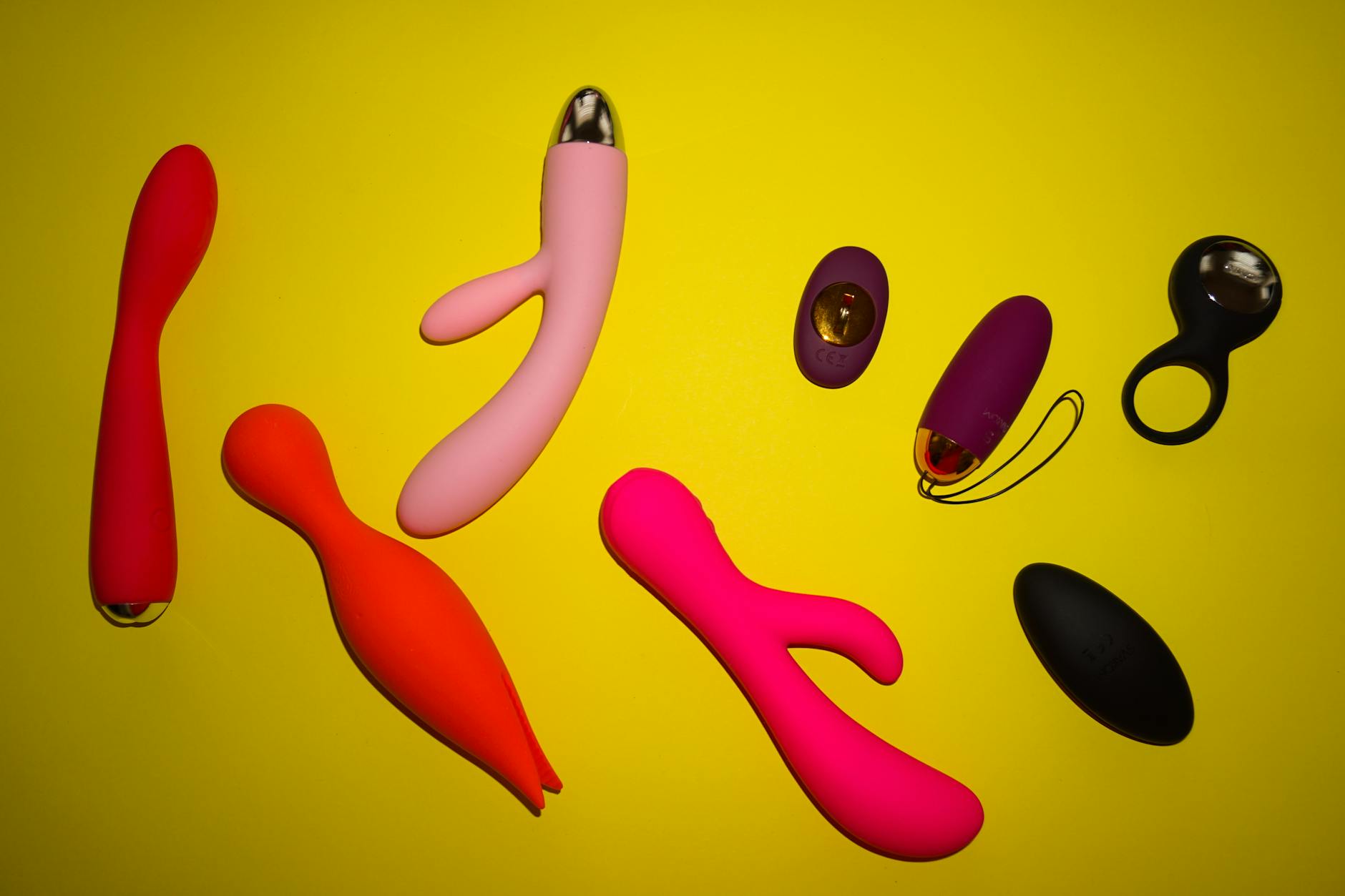
Your body has changed. Not broken. Changed. And the change most people don't expect is the timeline. Where arousal used to arrive on demand, now it takes longer. Sometimes much longer. For some, the frustration of waiting kills desire before pleasure even shows up.
Here's what I want to be clear about from the start: this is not a personal failing, and it's not something you've done wrong. Your nervous system is working exactly as it's supposed to at this stage of your life.
Estrogen doesn't just vanish at menopause. It gradually declines over years. Testosterone, which drives desire in all bodies, also drops slowly. The blood vessels that flood your clitoris and vagina during arousal respond more slowly to signals. Your brain takes longer to interpret stimulation as pleasure. The pelvic floor, which helps compress nerves and intensify sensation, loses some of its tone and responsiveness.
A clinical fact that usually surprises people: orgasm capability doesn't decline significantly with age. Desire and arousal do. That gap between what your body can do and how long it takes to get there is where most of the frustration lives.
If you've spent thirty years with a particular rhythm, your body learned that rhythm. Your partner learned it. Your nervous system locked in to it. Then your biology shifts, and suddenly that same five-minute warmup isn't enough. You reach for The Lemon Pleasure Toy on a lower setting, and nothing happens. That's not the device failing you. That's your arousal timeline not matching your expectation.
Most people respond by either giving up or turning the intensity way up, which actually backfires. High intensity on under-aroused tissue doesn't feel good. It feels harsh. It narrows your window of pleasure instead of expanding it.
Here's what I tell my clients to expect. If foreplay used to take ten minutes, budget twenty now. If you were ready in five, expect fifteen. Some people find they need thirty or even forty-five minutes of buildup before the clitoral vibrator feels genuinely good.
That sounds like a loss. In practice, it's often a gain. Why? Because longer arousal means more sustained blood flow, more time for your nervous system to warm up, and more opportunity for mental focus to settle in. People who lean into this longer timeline often report more intense orgasms, not weaker ones.
The key is reframing the time as part of the pleasure, not a barrier to it.
Start lower than you think you need to. If The Lemon Pleasure Toy has eight settings, begin on pattern two or three. The goal isn't immediate intensity. It's sustained, building sensation that gives your body time to catch up with your brain.
Spend five to ten minutes at each setting before moving up. This sounds tedious written down. In practice, it often feels luxurious because you're not chasing a destination. You're present with whatever's happening right now. Your arousal deepens gradually, which means you're more likely to reach genuine arousal rather than pseudo-arousal that evaporates the moment you change approach.
Your brain is a sex organ. At this stage, it's arguably the most important one. Longer arousal time requires more mental engagement. Distraction becomes a bigger enemy. Some people find they need to actively clear their mind, turn off their phone, and create space that wouldn't have mattered ten years ago.
If you're partnered, this is also where communication changes. Your partner needs to understand that slow doesn't mean disinterested. It means your nervous system needs more time. The Lemon clitoral vibrator works best when you're both willing to slow down and meet each other there.
Even if you've never needed it before, lubrication becomes essential now. Lower estrogen means thinner vaginal tissue and less natural lubrication. Water-based lube isn't a crutch. It's infrastructure. Use it generously, reapply as needed, and think of it as extending your arousal window rather than compensating for something broken.
Proper lubrication actually makes the longer timeline work better because it reduces friction and discomfort, which means you can focus on sensation rather than physical irritation.
You might have heard about kegels. If you've been doing them for years, keep going. But there's a flip side that becomes crucial now. Your pelvic floor needs to learn how to relax. Many people actually develop tension in their pelvic floor as they age, which can make arousal feel more distant, not closer.
Spend time learning to consciously relax these muscles. Breathwork helps. So does touching yourself without the vibrator sometimes, just to reconnect with sensation at a slower pace. When you switch to The Lemon Pleasure Toy, your pelvic floor will be more cooperative.
If you're not on hormone therapy and you've noticed a dramatic shift in arousal speed, it might be worth talking to your doctor. Testosterone therapy, estrogen therapy, or other approaches can sometimes help speed up the timeline. This isn't for everyone. Some people prefer to work with their body as it is. But if the slowness is genuinely frustrating, medical support exists and it works.
I mention this because I've watched people spend months adjusting their expectations when a simple adjustment to their hormone regimen would have been more helpful. You don't have to choose between accepting your body and getting support.
When you're alone, you can set your own pace completely. No pressure. No timeline. Many people find that self-pleasure becomes deeply satisfying at this stage precisely because the pressure is gone.
With a partner, longer arousal time requires actual communication. Not "hint strongly" communication. Real conversation about what you need and how long it takes now. Partners often feel rejected if they don't understand that the shift is biological, not personal. Explaining it clearly changes everything.
Arousal is not a straight line anymore. Your body might build to a certain level and then plateau. You might lose it partway through if you change approaches too quickly. This is normal. It's not a sign you've lost the ability. It's a sign you need more continuity and consistency in how you approach stimulation.
With The Lemon Pleasure Toy, this means staying at one setting longer than feels natural. It means reducing distractions more ruthlessly. It means your brain has to stay involved throughout. For some people, that's frustrating. For others, that depth of attention is exactly what makes pleasure feel rich again.
If you're partnered and your partner's timeline hasn't shifted, you now have different paces. This is solvable but requires honesty. Some couples find that partner-solo alternation works well. Others discover that having The Lemon Pleasure Toy active during partnered time helps both people reach arousal on their own schedule.
There's no shame in that. The vibrator isn't replacing your partner. It's equalizing your nervous systems so you can actually be present together.
Most of the frustration people describe comes from comparing their current arousal timeline to their past. Stop doing that. You're not trying to recreate how it used to work. You're discovering how it works now. That's not worse. It's different, and when you stop fighting the difference, you often find the pleasure is actually deeper.
Your body hasn't betrayed you. It's just operating on different timings. And when you honor that timing instead of resisting it, everything changes.
There's no universal timeline, but most people I work with report needing fifteen to forty-five minutes of sustained stimulation before feeling genuinely aroused. Some need more, some less. The real measure isn't clock time. It's how aroused you actually feel, not how aroused you think you should feel.
Not really. The device doesn't speed up your nervous system. What it does do is provide sustained, graduated stimulation that your body can respond to at its own pace. Used properly, it makes the longer timeline feel less frustrating because the sensation is consistent and building. Speed was never the point.
Honestly, the opposite usually works better. Higher intensity on tissue that hasn't warmed up yet feels harsh, not pleasant. Start low and build. Let each setting work for several minutes before moving up. Your arousal will build more reliably than if you rush to maximum intensity.
Not necessarily. It's a normal part of aging, especially around and after menopause. That said, if your arousal speed dropped suddenly and dramatically, or if you've also experienced pain or other changes, a conversation with your doctor is worth having. Sometimes it's just age. Sometimes there's something specific that can be helped.
You might try: "My nervous system is working the way it's supposed to at this stage. This isn't about you. But I need you to understand that rushing doesn't help. If we slow down together, I can usually get there. And when I do, it's really good." Then actually demonstrate that. When your partner sees that patience leads to genuine arousal and satisfaction, the resistance often melts.
Often the opposite. Because arousal builds more gradually and completely, orgasms can actually be more intense. You're not chasing a quick peak. You're building sustained arousal that compounds over time. Many people describe their post-40 orgasms as deeper and more satisfying than earlier ones, even if they take longer to reach.
Longer arousal isn't a problem to solve. It's a reality to work with. When you stop fighting it and start honoring it, pleasure doesn't disappear. It transforms. Your body is still absolutely capable of intense sensation and orgasm. The timeline just changed. And once you accept that, everything gets easier.