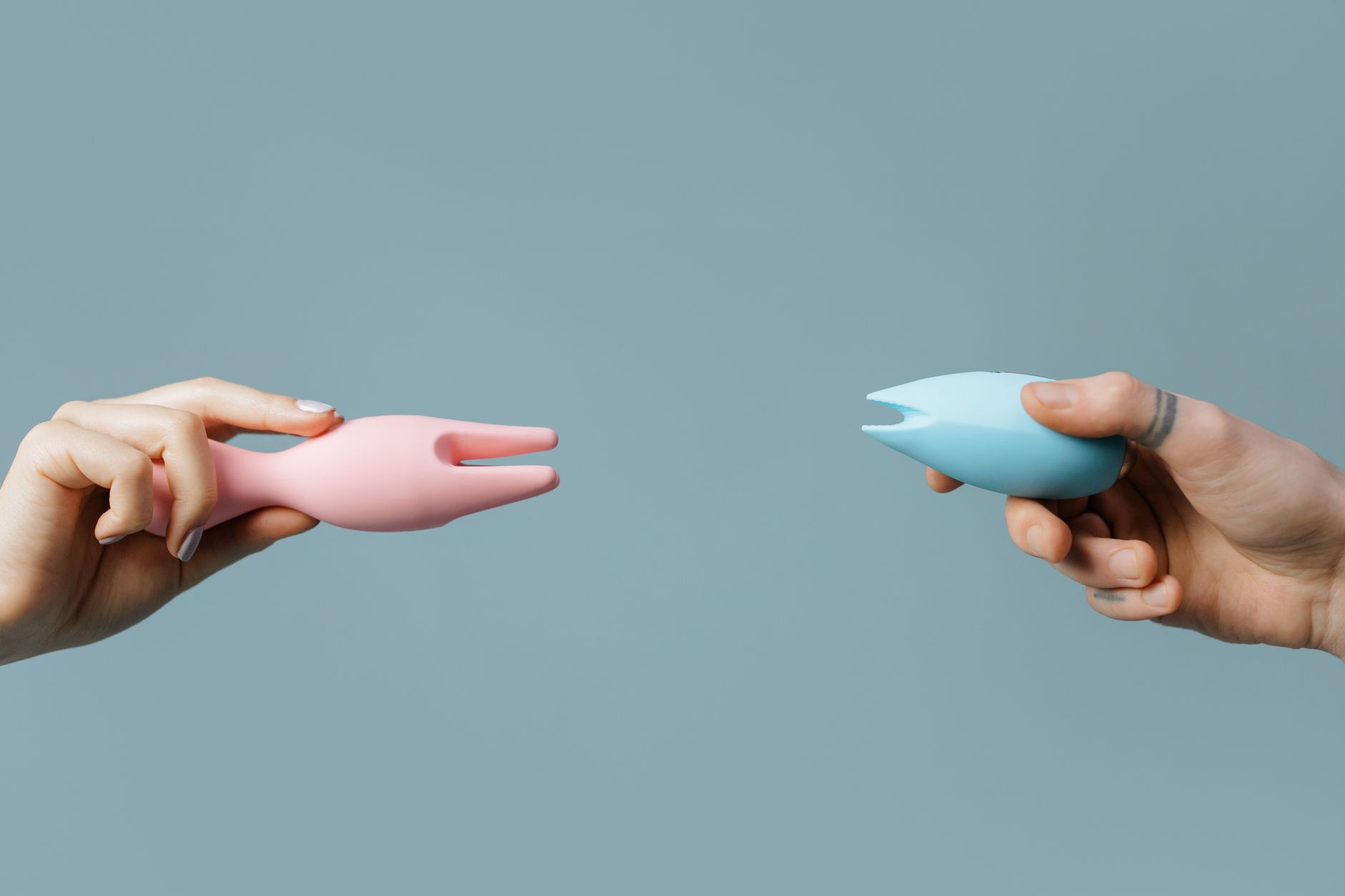
Here's the thing about partners who resist toys: it's rarely about the toy itself. It's about what the toy represents to them. Threat. Inadequacy. A sign that something is broken between you. Sometimes it's pure unfamiliarity, wrapped in low-key shame.
I've worked with couples for years on this exact friction point. The pattern is always the same. One partner wants to introduce a lemon vibrator or another clitoral vibrator into their sex life. The other partner shuts it down hard. Then comes the impasse: either you drop it (and resent them quietly), or you introduce it anyway (and trigger a fight about trust).
Neither of those outcomes is what you actually want.
When someone resists toys, they're usually saying one of three things, whether they know it or not.
"I'm worried I'm not enough." The biggest one. If they bring you to orgasm, and a vibrator also brings you to orgasm, they do the math in their head and land on a very uncomfortable place. You might not even need them anymore. This is almost never what's true, but it feels true to them.
"I don't know how this works, and not knowing feels like failure." New things are uncomfortable. Introducing a lemon clitoral vibrator means admitting they don't already know how to make this work, which can feel humiliating if they've been performing competence in the bedroom for years.
"This breaks a rule I didn't know I had." Some people grow up with silent beliefs about what sex "should" look like. Toys weren't part of that picture. Adding them now feels like betraying an older version of themselves, or betraying their family of origin.
None of these reasons are stupid. They're just human. But none of them are true reasons to skip something that could actually make both of your lives better.
Most people try to sell the toy. "It'll feel amazing." "We could try this together." That approach asks your partner to make space for your pleasure while they're already in a defensive crouch about their own adequacy. It doesn't work.
Instead, start with curiosity about what's actually underneath the no. Not in a therapist way. Just: "I notice you seem uncomfortable with the idea of bringing toys in. I'm wondering what that's about for you?"
Then listen. Really listen. Don't interrupt to defend yourself or explain why they're wrong. Just let them tell you what the actual fear is.
Once you know what they're afraid of, you can actually address it. If it's "I'm not enough," you can say: "I love how you touch me. This isn't about replacing that. It's about giving my body one more thing to feel good. That's not less of you. That's more of us."
If it's shame about not knowing how to use a toy, you can suggest you both figure it out together, with zero performance pressure. Learning something new as a team builds intimacy, not distance.
If it's a deep belief thing, you might say: "I grew up with different messages about my body and what I deserve from my own pleasure. Using a lemon vibrator is me choosing something new for myself."
One huge mistake is introducing the toy during sex, mid-intimacy, when everyone's vulnerable. That's the worst possible time to ask your partner to adapt to something new.
Instead, bring it up outside the bedroom. Talk about it like you'd talk about anything else you're considering. Then, if they're open to it, introduce it slowly.
First time? Use it on yourself while they watch. No pressure on them to do anything. Their only job is to be present and see that you're not replacing them, you're just exploring your own body. Most resistance softens when they actually witness what a lemon clitoral vibrator does. It's a tool. It's not a substitute partner.
Second time? Ask them if they want to touch you while you use it. Not controlling it, just being close. Skin to skin. They'll start to see it as an addition to what's already happening, not a replacement.
Third time? They might want to control it. Let them. This is where trust rebuilds fast. When they hold the device and see exactly how much pleasure it brings you, and understand that you still want them there in the bed with you while it's happening, the threat dissolves.
Sometimes a partner says no to toys because they're not actually that into sex with you anymore. They're deflecting. Using the "I don't believe in toys" line as a way to avoid saying "I'm not interested in us sexually." That's a different conversation entirely, and it's important.
If you've had the honest conversation about why they're resistant, and they still shut down, it might be worth asking: "Is this really about the toy, or is something else going on between us?" That can open a bigger, messier, more important talk.
A lemon vibrator can't fix a relationship that's already broken. But it can enhance one that's just stuck.
Here's what I've seen happen, over and over, in couples who push through this friction point: once a partner actually experiences a lemon vibrator in the context of sex together, something shifts.
They realize it's not threatening. They realize their partner still wants them. They realize watching someone you care about experience pleasure is actually sexy, which was the part they never expected.
Many partners become enthusiastic users. They want to control the pattern. They want to know which setting you prefer. They start paying attention in new ways.
Sometimes they even want toys for themselves. But that's a conversation for another day.
The key is that once you get past the initial resistance and they see it's not the nightmare they imagined, most of that fear evaporates. You get your pleasure. They get to stay. Everyone wins.
If you've had the honest conversation, given them time, started small, and they're still completely shut down, then you have a choice. You can respect that boundary. Or you can use your lemon vibrator solo, privately, which is also completely fine.
Solo pleasure isn't a second-choice thing. Some of the most satisfying orgasms happen when you're alone, no performance required. That's not a compromise. That's self-knowledge.
But most often, the resistance isn't actually immovable. It's just untested. Your partner has never seen it, never touched it, never been in the room while something felt genuinely good for you. Once those things happen, they usually soften.
Once you're actually using a lemon clitoral vibrator together, communication keeps working. Not performance-y communication. Just: "That felt really good." "I liked it when you..." "Can we try...?"
Many couples find that toys actually improve their sex life because they stop waiting for one person to be enough and start collaborating on what both people actually need.
If you're struggling with a partner who won't budge on toys, you're not broken. The resistance is real, but it's usually not about the toy. It's about fear, shame, or learned beliefs about what sex is supposed to look like. None of those are permanent.
You deserve pleasure. Your partner deserves to feel secure. Those two things are compatible. It just takes a conversation that moves past the defensive wall to the actual person standing behind it.
Start outside the bedroom with curiosity, not sales pitch. "I've been thinking about my pleasure and what feels good to me, and I want to explore something new. I'd love your thoughts." That positions it as something about you, not something missing in them. Most offense comes from feeling ambushed or replaced. When you frame it as self-exploration, the threat usually dissolves.
That belief usually comes from older narratives about sex being a performance that one person either nails or doesn't. Reality is different. Toys enhance connection. They're collaborative. Many couples who introduce toys together actually report deeper intimacy because they're talking about desire, trying things, and paying attention to what works. You might say: "I love being with you. This is me choosing to also love my body. Those aren't in conflict."
You can, and your solo pleasure is yours alone. But if there's a relationship underneath that secrecy, the secrecy usually costs more than the toy gains you. If your partner is controlling what you do with your own body, that's a separate issue worth examining. If they're just fearful, that fear often softens with time and reassurance.
Respecting boundaries matters. But there's a difference between "I'd rather not use toys" and "You can't use toys." The first is a preference. The second is control. If it's a preference, you have options: use it solo, use it privately, negotiate what you're both comfortable with. If someone is controlling your access to your own pleasure, that's worth looking at more broadly in your relationship.
Temporary resistance usually comes with curiosity underneath. "I'm not sure about this, but tell me more." Permanent resistance often sounds like a hard rule: "I don't believe in that." Even permanent can shift with time, presence, and trust. But you can't force it. What you can do is keep inviting them into honesty about what's actually driving the no. Most people soften when they feel heard rather than pushed.
That's incredibly common. Many couples report that toys remove performance pressure, open conversations about desire, and create space for actual collaboration instead of one person trying to do it all right. You might even find your partner ends up preferring using a lemon vibrator together because it takes the pressure off them and lets them focus on being present with you.
If you're navigating this right now, be patient with your partner. Be honest with yourself. And remember that pleasure is not a zero-sum thing. You both get to feel good. It just takes communication, time, and willingness to try something new together. That's the work of any relationship worth staying in.