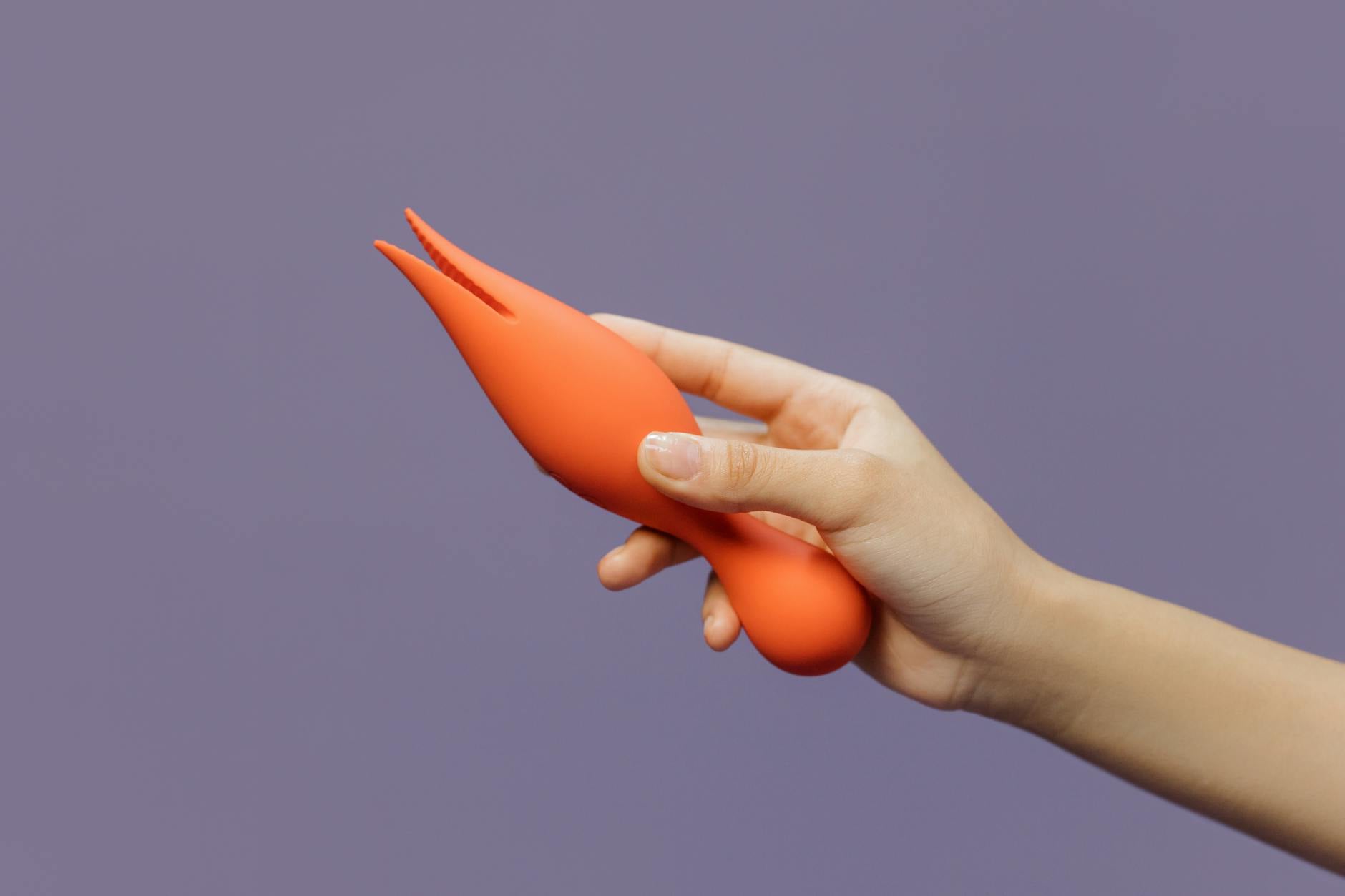
How to Use a Lemon Vibrator When Your Partner Wants a Slower Pace
Your partner craves extended sensation without intensity. Here's the exact strategy for using a lemon clitoral vibrator to build pleasure gradually, stay connected, and make every minute count.
One of you wants to get there. The other wants to stay here. That's not a flaw in the relationship. That's actually one of the most common pleasure patterns I see, and it's completely workable once you stop treating it like a problem.
Here's what typically happens: the faster partner defaults to higher intensity, patterns shift, and the slower partner feels rushed. Or worse, they disconnect because the rhythm doesn't match their body's timeline. A lemon clitoral vibrator is honestly ideal for this dynamic because it's built for nuance, not just power. You can work slower patterns, lower intensity, and longer duration without anyone feeling shortchanged.
Traditional vibrators buzz at a fixed frequency, which creates a ceiling pretty fast. You either turn it on or off, and the only variable is which setting you choose. A lemon sucker works differently. The sensation comes from gentle suction and pulse patterns, which means you can build intensity much more gradually. You're not jumping from "off" to "intense" in two clicks.
This matters because slower partners often need what I call "permission to stay." They're not trying to rush to orgasm. They're exploring the sensations along the way. The lemon vibrator's design respects that. You can spend ten, fifteen, twenty minutes at settings one and two without anyone feeling like you're stalling.
The other thing: suction feels different on the clitoris than traditional vibration. It's less relentless. That means you can use it longer without numbness or overstimulation creeping in, which is huge when you're aiming for a slower session.
This is where most couples actually fail. You don't talk about what slower means. Does your partner want longer foreplay? Fewer intensity jumps? No orgasm at all, just sensation? Those are three completely different sessions.
Before you touch the toy, be specific. "I want us to spend at least twenty minutes just with lower settings" is a sentence. "Let's see how long we can stay at pattern two without advancing" is a sentence. "I want to feel you respond gradually instead of chasing the peak" is a sentence. None of those take effort, and they save the entire session.
Also agree on a check-in method. Some couples do a simple "should we stay here or move on" every five minutes. Others use a hand signal. The point is that neither of you is guessing where the other person is in their pleasure arc.
Comfort first. You're not racing, so position matters. Pillows under the hips, back support for whoever's receiving. You're going to be in this position for a while, so invest in comfort now.
Lubrication is non-negotiable. With longer sessions, even bodies that normally self-lubricate run dry. Start with water-based lube and keep some nearby. It's not a sign something's wrong. It's what happens when you're being thorough.
Foreplay before the toy arrives. Don't just hand your partner the lemon vibrator cold. Touch them for ten minutes first. This isn't about reaching arousal. It's about establishing rhythm and presence. When the toy enters, the sensation lands differently because the nervous system is already dialed in.
Set a timer if you need to. This sounds unromantic until you realize that without a timer, the faster partner gets anxious ("Are we taking too long?") and the slower partner speeds up to accommodate. A timer actually frees you both to stop thinking and stay present.
Here's the exact progression I recommend for slower sessions:
Minutes one to five: Patterns one or two, no contact on the clitoris. Hold the lemon vibrator against the inner thigh, the mons pubis, anywhere near but not on. Let your partner feel it from a distance. The anticipation is the whole point.
Minutes five to ten: Light contact on the clitoris, lowest pattern. Now bring the vibrator in, but hover. Don't create full suction immediately. Some people call this "teasing." It's really about letting sensation build without intensity.
Minutes ten to fifteen: Consistent contact, same pattern. Settle in. This is where you stay. Don't advance the pattern. Instead, change angles slightly. Move from the top of the clitoris to the side. Let your partner guide you. The goal here is depth, not progress.
Minutes fifteen onward: Stay flexible. Some partners want to stay here for ten more minutes. Others want a slow climb to pattern three. You've already got the conversation, so you know which one applies. But the key is that you're deciding together every few minutes, not assuming.
Here's something that changes everything: your partner should be touching you (or themselves) while you're using the lemon vibrator on them. Not just lying back receiving. Actually engaging.
This does three things. First, it distributes the sensation so it doesn't feel entirely concentrated on the clitoris, which helps with overstimulation on long sessions. Second, it gives your partner an outlet for the energy building in their body. Third, it creates reciprocity. You're not performing for them. You're both in this together.
If you're using the vibrator on a partner, ask them to touch your chest, your neck, your thighs. Keep that feedback loop active. The session becomes a conversation, not a show.
Most slower partners will actually tell you they want to stay at a given intensity for longer than you'd expect. That's not boredom. That's their body still unpacking the sensations at that level. Let it happen.
The signal to advance is usually when your partner starts asking for it. "Can we go up?" or their hand moving yours toward a higher setting. Not when you think it's been "long enough."
One thing I see happen in slower sessions: the receiving partner will sometimes ask for higher intensity right at the end, in the last few minutes. Don't interpret that as "we should have started here." They built to that point. The slow ramp made the final intensity more satisfying, not less.
When you're spending thirty, forty, fifty minutes with a lemon clitoral vibrator, sensitivity is going to shift. The area might feel tender. Some sensation might feel numb for an hour or two afterward. That's normal and it fades, but your partner should know it's coming.
If you want to extend sessions even further, take a five-minute break halfway through. Let sensitivity reset. Then come back. This is actually more pleasurable than pushing straight through.
Here's what separates a slow session that feels intimate from one that feels like a chore: you're talking. Not in a clinical way. Just checking in. "Feel good?" "Want to stay here?" "I love watching you like this." Small things.
Also, maintain eye contact or skin contact. If you're holding the vibrator, keep your other hand on your partner. If they're using it on themselves, sit close. The toy is technical. The connection is what makes it matter.
People are wired differently. Some nervous systems need time to process sensation. Some people find that slower sessions feel more emotionally intimate. Some just enjoy the sensation itself without needing to chase orgasm. None of those are less valid. In fact, they're often overlooked because so much pleasure advice is framed around speed and intensity.
Absolutely. Solo slow sessions are actually where a lot of people discover what they actually enjoy versus what they think they should enjoy. Use the same pattern progression. Give yourself permission to stay at lower settings for longer. Many people find that the deeper awareness that comes from a slower solo session actually improves partnered sessions too.
That's a sign something's off with communication. Boredom is usually either "I wanted something different" or "I'm not actually connected to my partner right now." Before you blame the pace, ask yourself: Did we talk about what we both wanted? Am I present, or am I clock-watching? Is my partner actually enjoying this, or are they accommodating me? Those conversations happen outside the bedroom, not during.
Completely normal. After twenty or thirty minutes of stimulation, the clitoris can feel less responsive or sensation might shift from sharp to dull. This is called accommodation, and it's why taking a break helps. It's also why slower sessions sometimes don't end in orgasm, and that's completely fine.
Yes, and actually most couples do. The key is communicating the transition. "I want to stay slow for the next fifteen minutes, then we can build" is totally valid. The lemon vibrator handles this better than other toys because you're not jumping between extremes. You're sliding along a spectrum.
That's actually a compliment. They're so relaxed they drifted off. Let it happen. You can use it as a chance to just be present with them without performance pressure. Or you can gently wake them and see if they want to continue. Either way, you've created a safe enough space that they could fully relax. That's intimate.
Slower sessions aren't a compromise. They're not what you do when someone can't keep up. They're actually where a lot of couples find the deepest connection because you're not racing toward a finish line. You're exploring together. You're checking in. You're honoring what both of you actually want instead of defaulting to what you think you should want.
The lemon vibrator just happens to be perfectly designed for that kind of intentional pleasure. If you're looking to slow down and deepen things with your partner, it's worth a conversation and an experiment. The patterns, the suction design, the ability to build gradually without intensity jumps. All of it serves a slower pace better than you'd expect.