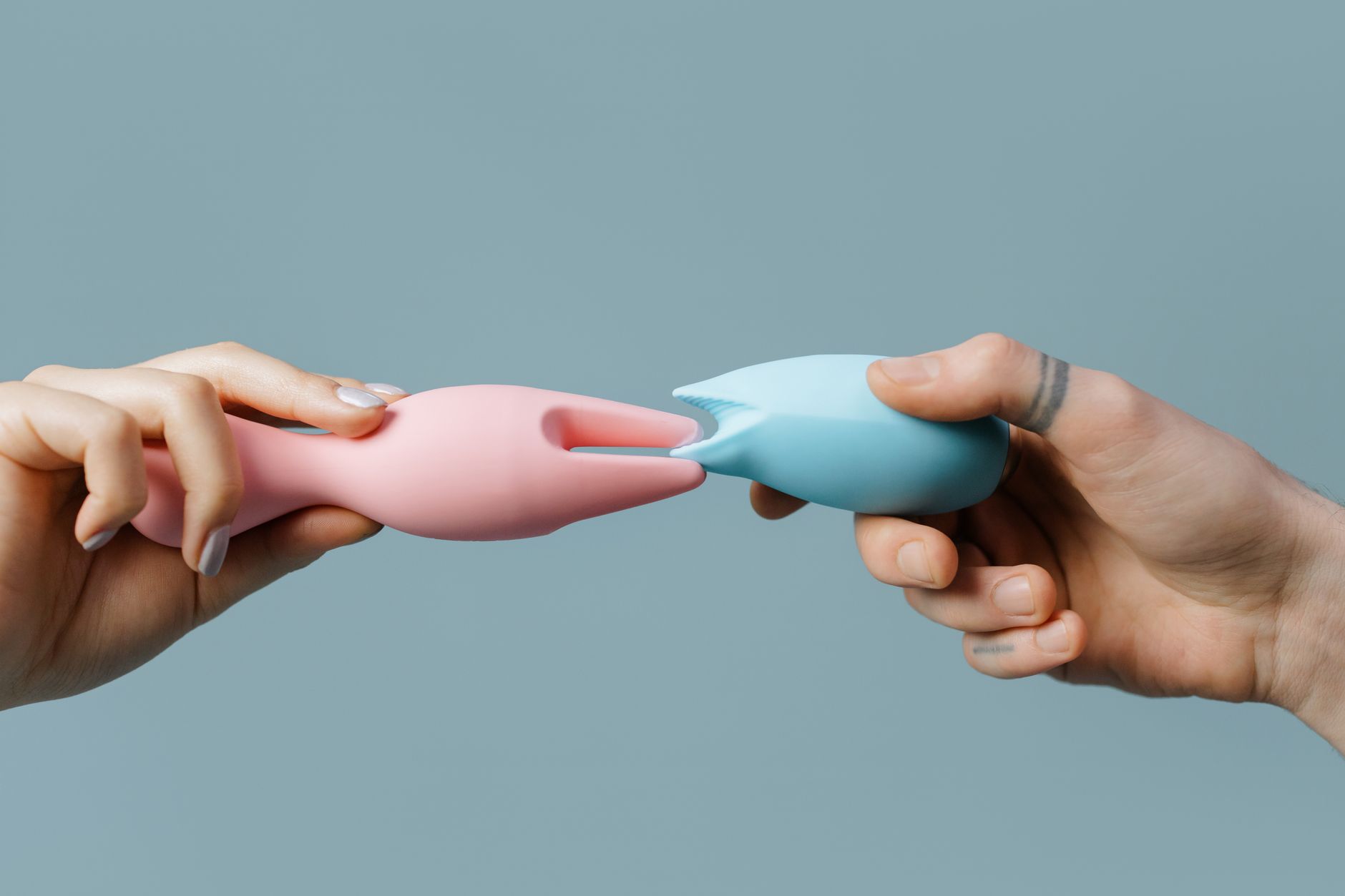
How to Use a Lemon Vibrator When Partners Have Different Pleasure Speeds
One of you finishes in minutes. The other needs time. Here's how a lemon clitoral vibrator bridges the gap and turns timing mismatch into deeper connection.
Your partner reaches climax in four minutes flat. You're barely getting warmed up. Neither of you is wrong. You're just wired differently. That's not a sign the relationship is broken. It's actually incredibly common, and it's fixable.
The problem is that most couples treat this mismatch as a personal failure rather than a structural one. "I'm taking too long." "They're too quick." Both beliefs are shame dressed up as logic. What's actually happening is that your nervous systems have different arousal ramps, and you need a different game plan.
A lemon clitoral vibrator changes the equation entirely, because it separates your pleasure timeline from theirs.
Arousal isn't one process. It's at least three. There's physical readiness (your body is responding). There's mental engagement (you're actually present, not running the grocery list). And there's what I call permission, which is your nervous system's green light that it's safe to let go.
Partners with faster arousal ramps often have one or more of these going at higher baseline. Maybe they're naturally more excitable. Maybe they had a sexual awakening earlier. Maybe their nervous system is more responsive to novelty. None of this means their pleasure is shallower. It just means they get there faster.
The partner who takes longer isn't broken either. Slower arousal sometimes comes with richer sensation, more mental engagement, or a nervous system that needs more time to move from alert to relaxed. Some of the most intense orgasms happen on a longer timeline.
When you stop treating this as a problem and start treating it as a difference, everything changes.
Here's what usually happens. The faster partner orgasms, feels embarrassed, gets quiet. The slower partner feels rushed, loses focus, doesn't reach climax. Then resentment settles in. The faster partner thinks, "Why does sex have to take so long?" The slower one thinks, "They don't care if I finish." Both narratives are wrong. It's a structural issue wearing a relationship costume.
It also tanks the actual pleasure available to both of you. The faster partner, anxious about their timing, starts trying to slow down. That mental effort kills natural sensation. The slower partner, feeling self-conscious, shuts down. You're both performing now, and nobody's actually feeling much.
With a lemon vibrator in the picture, you flip the whole dynamic. Suddenly you have a tool that lets you both experience pleasure on your actual timeline, together.
The beauty of a lemon vibrator is that it doesn't require matching your partner's arousal speed to your own. Instead, it lets you both reach climax independently while staying emotionally connected.
Here's the practical shift. Your partner can enter the experience at their natural speed. When they're close, you're either just starting or somewhere in the middle. Instead of one person waiting or rushing, the person moving slower uses the lemon vibrator. Suddenly you're both moving toward climax on parallel tracks.
This takes the shame out of the equation. Nobody's waiting. Nobody's being rushed. The focus moves from "Why can't we sync?" to "What can we both enjoy right now?"
The lemon sucker design matters here too. It creates sustained sensation without requiring constant adjustment. You can find your rhythm and stay there while your partner does the same. It's not about matching beats. It's about giving you both permission to chase your own pleasure while remaining present with each other.
Here's what I tell couples who come to my practice with this exact issue. You cannot fix a timing mismatch with better technique alone. You have to address it as a topic first.
Something like: "I've noticed we finish at really different times, and I don't think either of us is enjoying that. I'd like to try something that might help us both feel good without one of us waiting. Would you be open to that?"
Notice what's in that. No blame. No performance anxiety. No comparison. Just clear problem identification and a collaborative offer.
Then listen to what your partner says. Sometimes they didn't even notice. Sometimes they've been mortified. Sometimes they have their own fear about the mismatch. Getting specific about what you've each been feeling matters.
Let's get tactical. Here are the sequences that actually work.
The parallel play setup: Start together. Your partner enters at their natural pace. When you notice you're moving at different speeds, that's your cue to introduce the lemon vibrator. You guide it to your own pleasure while they continue with whatever feels good for them. The key is that this doesn't feel like a timeout or a substitution. It's just part of the flow.
The synchronized start with a staggered finish: You begin together with hands, penetration, whatever your usual foreplay is. Before your partner gets close, they tell you or show you somehow. You then use the lemon clitoral vibrator to catch up, and you both finish in closer proximity. The intimacy of being aware of each other's timeline actually deepens connection.
The extended pleasure model: Your partner finishes first. Instead of that being the end, you take a breath together, and they use their hands or the lemon vibrator on you while you finish. This removes the pressure on both sides. They know they can enjoy their orgasm without guilt. You know you'll get there too.
None of these require you to announce what you're doing like it's a medical procedure. You're just adjusting the setup to match reality.
CounterIntuitively, solving a logistics problem often creates more emotional closeness, not less. Here's why. When you stop fighting against how you're wired and instead work with it, you both relax. Relaxation is where real pleasure lives.
You're also practicing communication about desire without shame, which is the foundation of long-term sexual satisfaction. You're saying, "Your pleasure matters. My pleasure matters. We figure this out together." That becomes the template for everything else in your intimate life.
Most importantly, you're removing a silent tension that's been sitting between you. The faster partner doesn't have to feel embarrassed. The slower partner doesn't have to feel inadequate. You're both just people with different nervous systems trying to feel good together.
Beyond the lemon vibrator itself, a couple of practical things make this easier.
A water-based lubricant is helpful, especially if you're extending foreplay or using vibration for longer sessions. It keeps sensation consistent and reduces friction-related discomfort. Stay away from numbing products. You want to feel what's happening, not avoid sensation.
Timing your conversation for outside the bedroom helps too. When you're already in the moment and something feels off, that's not the time to troubleshoot. But a weeknight conversation where you're both clothed and calm gives you space to actually think and listen.
Consider also whether medication, stress, or hormonal fluctuations are playing a role. If one partner's arousal timing has shifted recently, that's worth examining separately. But most of the time, timing mismatch is just neurology, and lemon vibrators are designed exactly for this.
Here's something else that often shifts. Once couples solve the timing problem, they realize they've been missing something bigger. Sometimes the partner who climaxes quickly has been rushing because they unconsciously expect their pleasure to "count" less. Sometimes the slower partner has been performing slowness, staying tense instead of actually taking the time they need.
This is where things get interesting. A lemon vibrator isn't just a tool for mechanics. It becomes permission. Permission to move at your own speed. Permission to feel what you actually feel. Permission to want what you want.
That's the shift that leads to real satisfaction. Not better timing. Deeper acceptance.
Don't lead with the vibrator. Lead with curiosity. "I've been thinking about how we could both enjoy sex more. Would you be interested in trying something that might help us feel better together?" Keep it about connection, not correction. Once they're open, introduce the tool. Most resistance dissolves when it's framed as "this helps both of us" rather than "you're doing it wrong."
Only if you frame it that way. If you introduce it as "I need this because you're not enough," yes, that's a problem. If you frame it as "This helps me be more present with you," it becomes collaborative. The fastest way to prevent resentment is to use the vibrator during partnered sex, not instead of it. You're adding pleasure, not subtracting them.
That's a separate conversation than timing. That's about willingness to reciprocate pleasure. A vibrator can't fix that. You might need to address why they check out after their own orgasm, and that might benefit from a therapist or coach who specializes in desire and reciprocity. Sometimes it's exhaustion. Sometimes it's avoidance. It matters which one it is.
The opposite, actually. Shame and rushing are intimacy killers. Presence and permission are intimacy builders. A tool that lets you both relax and feel good together is inherently more intimate than either of you performing or suppressing.
Normal looks like: different but consistent arousal speeds, both people finishing within a reasonable window, no resentment building over time. Concerning looks like: one person always feeling unsatisfied, avoidance of sex, resentment that's bleeding into other areas of the relationship. Timing differences are normal. Relationship rupture around sex is worth addressing with a therapist.
Sometimes. If their difficulty comes from distraction or not enough stimulation, yes. If it's related to trauma, medication, or disconnection in the relationship, a vibrator is supporting tool, not a solution. Those require deeper work.
Your pleasure speeds don't match. That's not a personal failure or a sign you're incompatible. It's just how your nervous systems are wired. A lemon vibrator doesn't fix the mismatch. It does something better. It removes the need to match in the first place. You both get to feel good on your own timeline, together. That's where real satisfaction lives.
Ready to explore what works for you as a couple? We're here to help. Reach out at The Lemon Pleasure Toy, or get in touch with a relationship coach who can work through the emotional side of this with you.