How to Use a Lemon Vibrator When You Feel Guilt About Self-Pleasure
Pleasure guilt stops more people from exploring what feels good than any physical barrier. Here's where it comes from, why it matters, and how a clitoral vibrator becomes permission.
Pleasure guilt is not a personal failure. It's a inheritance. You absorbed messages about your body, your desire, and your worth from family, religion, culture, and peers long before you had any say in the matter. Some of those messages were explicit. Most were not. Either way, they landed.
Here's the thing: knowing that intellectually does almost nothing to dissolve the feeling when you're alone with your own body and a moment of desire.
That's where I come in. I work with couples and individuals navigating exactly this friction, and I can tell you with certainty that guilt about self-pleasure is one of the most common, least discussed blockers to authentic sexual life. It shows up as hesitation, distraction, rushing, or simply not allowing yourself to explore. And it gets worse when you're partnered, because then you layer in beliefs about what you "should" want, when, and with whom.
Religious or cultural conditioning. If you grew up hearing (directly or indirectly) that sex is for procreation only, for your partner, or for married people, then solo pleasure becomes transgressive. Your nervous system learned early that this part of you was wrong.
Parental messaging about your body. Even parents who never explicitly said "don't touch yourself" can communicate shame through tone, quick redirections, or the simple absence of any positive messaging about your body or sexuality. You internalized: this part of you is not discussed, not celebrated, not quite okay.
Gendered expectations. People with vulvas often absorb the message that desire is something that happens to them, not something they create. Good girls don't initiate. Good girls aren't too interested. Good girls wait to be chosen. That's a narrow cage, and it teaches shame about wanting anything just for yourself.
Most people carry all three. Which means the guilt isn't small. It's layered.
Guilt is a nervous system state. When you're feeling guilty, your body is partially activated in a fight-or-flight response. Pleasure requires the opposite. It requires enough relaxation that your nervous system can actually receive sensation, build arousal, and move toward orgasm.
Try them at the same time and your body shuts down. You might start to feel something, then the guilt floods in. Distraction takes over. Arousal collapses. You stop, frustrated, and file the whole thing away as "not for me."
This is why so many people say they "can't orgasm" or "don't enjoy touch" when the real barrier is this low hum of shame underneath. It's not that you can't feel pleasure. It's that you haven't given yourself permission to feel it without judgment.
Here's where a lemon clitoral vibrator shifts something. And I want to be precise about how.
A lemon vibrator is not magic. It won't erase decades of conditioning in one session. But it does three things that help rewire your nervous system around pleasure.
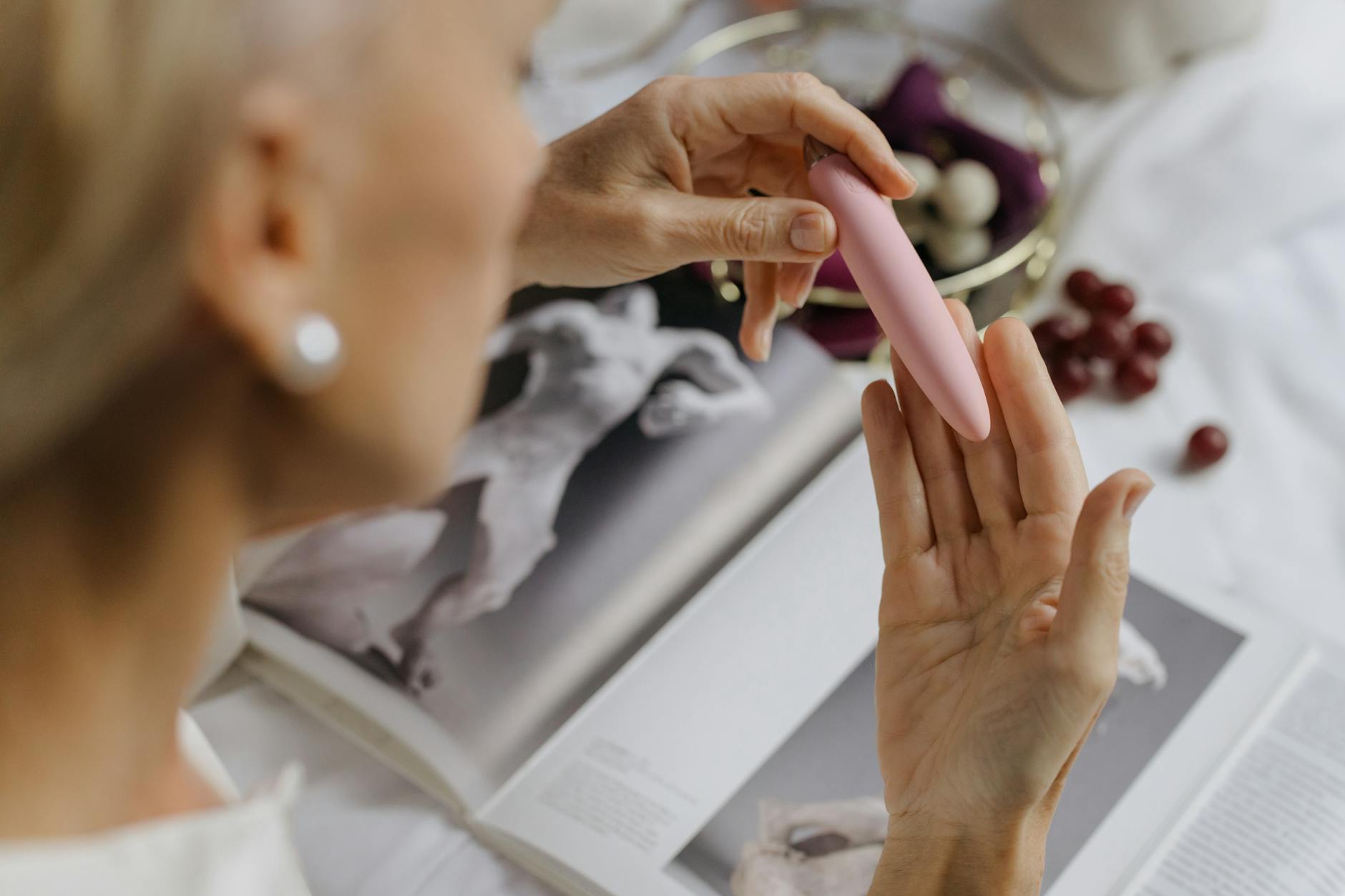
First: it's external validation. You bought this thing. It's designed specifically for your pleasure. Holding The Lem in your hand is a small act of permission. You're essentially saying, "My pleasure matters enough that I invested in this." Your brain registers that. Your nervous system starts to relax slightly around the idea that wanting pleasure is okay.
Second: it's a circuit-breaker for performance anxiety. When you use your hands alone, your mind stays in control. You can second-guess yourself, judge yourself, wonder if you're doing it right. A vibrator interrupts that inner critic. The vibration is external. It's happening to you, not by you. That small shift moves you from performer to receiver, which is where pleasure actually lives.
Third: it provides consistent, non-judgmental stimulation. Your fingers get tired. You get distracted by technique. But a lemon clitoral vibrator does one thing steadily. It doesn't judge you for taking longer. It doesn't get bored. It doesn't perform. It just delivers sensation. That reliability, paradoxically, makes it easier to relax and receive.
If guilt is your barrier, I recommend a very specific approach to your first time with The Lem.
Don't try to orgasm. I know that sounds counterintuitive, but the moment you make orgasm the goal, you activate performance mode again. And performance mode is where guilt lives.
Instead, set a different intention: "I'm going to learn what this feels like on my body. That's all. No outcome required."
Pick a time when you have at least thirty minutes and zero pressure. Not squeezed between appointments. Not while your partner is in the next room and you're keeping an ear out. Real, protected time.
Start with clothes on. Seriously. Let your body get used to the sensation without the vulnerability of being fully naked. The Lem works through fabric. You can explore what different intensities feel like while you're still partially dressed. That small buffer can lower the activation of shame for your first try.
When you're ready, move to skin contact. Start at the lowest setting. Let yourself feel it. Notice: does this feel good? Does it feel weird? Both are fine. Just notice without judgment.
If guilt starts to rise (and it might), pause and do two things. First, name it. "Guilt is here. That's old. It's not truth." Second, ask yourself: "Am I safe right now?" The answer is yes. You're alone, you're an adult, your body is yours. Guilt is a learned response, not an actual warning.
Solo pleasure guilt gets even louder when there's another person in the household. You might worry: Is this a rejection of my partner? Are they upset? Should I be doing this with them instead?
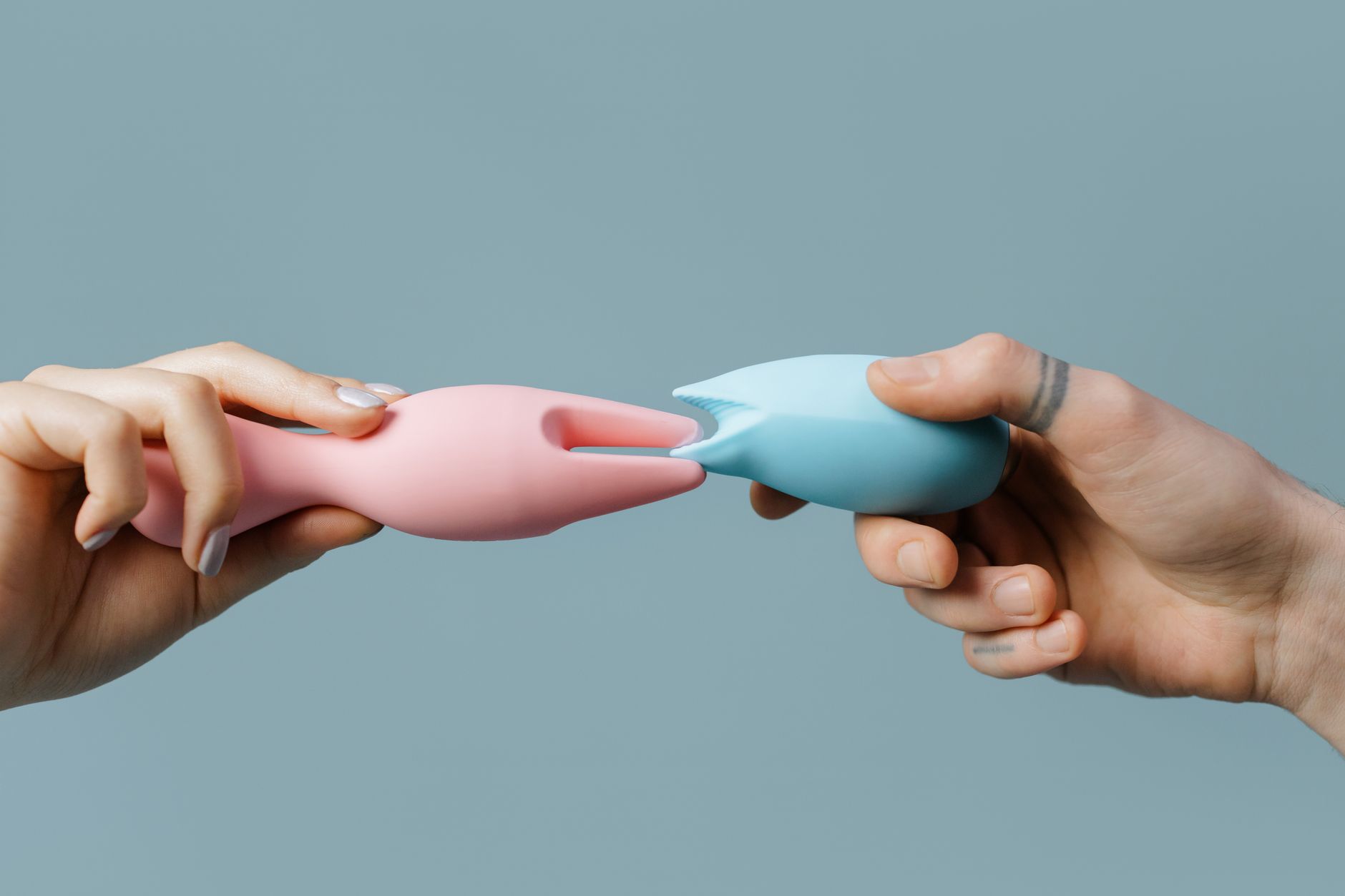
Here's what I tell couples: your solo pleasure and partnered sex are not the same thing. They don't compete. They're not either-or. A lemon clitoral vibrator in your solo time is not a statement about your partner or your relationship. It's you learning your own body in a no-pressure context. That knowledge actually makes partnered sex richer, not weaker.
If your partner expresses discomfort, have a conversation. Not during sex or right after. Separately. Ask what the discomfort is really about. Sometimes it's not about The Lem at all. Sometimes it's about feeling excluded, or a deeper insecurity about desire. Address the real thing, not the proxy.
And if you want to include your partner eventually, that's also fine. But start alone. Solo exploration is not selfish. It's foundational.
One session with a lemon vibrator won't erase pleasure guilt. But it's a data point. Each time you use it, you're building a new neural pathway: pleasure is safe. Pleasure is okay. Pleasure is mine.
Over weeks and months, that pathway gets stronger. The guilt doesn't disappear entirely, especially if you grew up with strong religious or cultural messaging. But it loses its veto power. You can feel guilt and pleasure at the same time, and pleasure wins more often.
That's the goal. Not to feel nothing. Just to choose yourself, consistently, until choosing yourself feels normal.
Eventually, a lemon clitoral vibrator stops being a permission slip and starts being just a tool you use when you want it. The permission became internal.
Completely normal. Most people who grew up in any kind of restrictive environment around sexuality experience this. The guilt isn't a sign that what you're doing is wrong. It's a sign that you absorbed some old messaging. Naming it as learned, not inherent, is the first step to moving past it.
No. Think of it like a good book making reading enjoyable. You don't become "dependent" on good books. You just prefer them. Your body can and does orgasm other ways. A lemon clitoral vibrator is just one tool that many people find more reliable and efficient. That's a feature, not a trap.
Yes, but framing matters. Instead of "I need this because you're not enough," try "I'm exploring what feels good in my body, and I'd like some privacy for that, just like you might want privacy for other things." If your partner still struggles, that's information about their own insecurities, not about your vibrator or your relationship health. Consider working with a therapist together if it becomes a ongoing block.
Given time. Guilt about pleasure is often years or decades old. One session won't rewire it. But each time you choose yourself anyway, you're building evidence that pleasure is safe. Eventually your nervous system catches up. If guilt is severe enough that it's really blocking you, working with a therapist who specializes in sex and shame can accelerate the process.
More than okay. Solo pleasure is not "practice" for partnered sex. It's its own complete thing. You deserve to explore your body and feel good in it, relationship status irrelevant. A lemon clitoral vibrator is just a tool for knowing yourself better.
Start small. You don't have to dive into a full solo session right away. You could just hold The Lem, turn it on, and feel it on your arm or neck. Build familiarity without the vulnerability. There's no timeline. Your body will tell you when it's ready to go further.
Pleasure guilt is real. It's also changeable. Every time you choose to explore your own body anyway, you're making a small, powerful statement: my pleasure matters. My body is mine. The shame I inherited doesn't get to run my life.
A lemon clitoral vibrator won't fix that alone. But it can be part of a practice of self-permission that, over time, completely reshapes your relationship to your own desire. And that's not a small thing. That's freedom.
If you're ready to explore, start with a low-pressure, no-outcome first session. If guilt comes up, acknowledge it and keep going anyway. Your body will remember. And eventually, so will your mind.