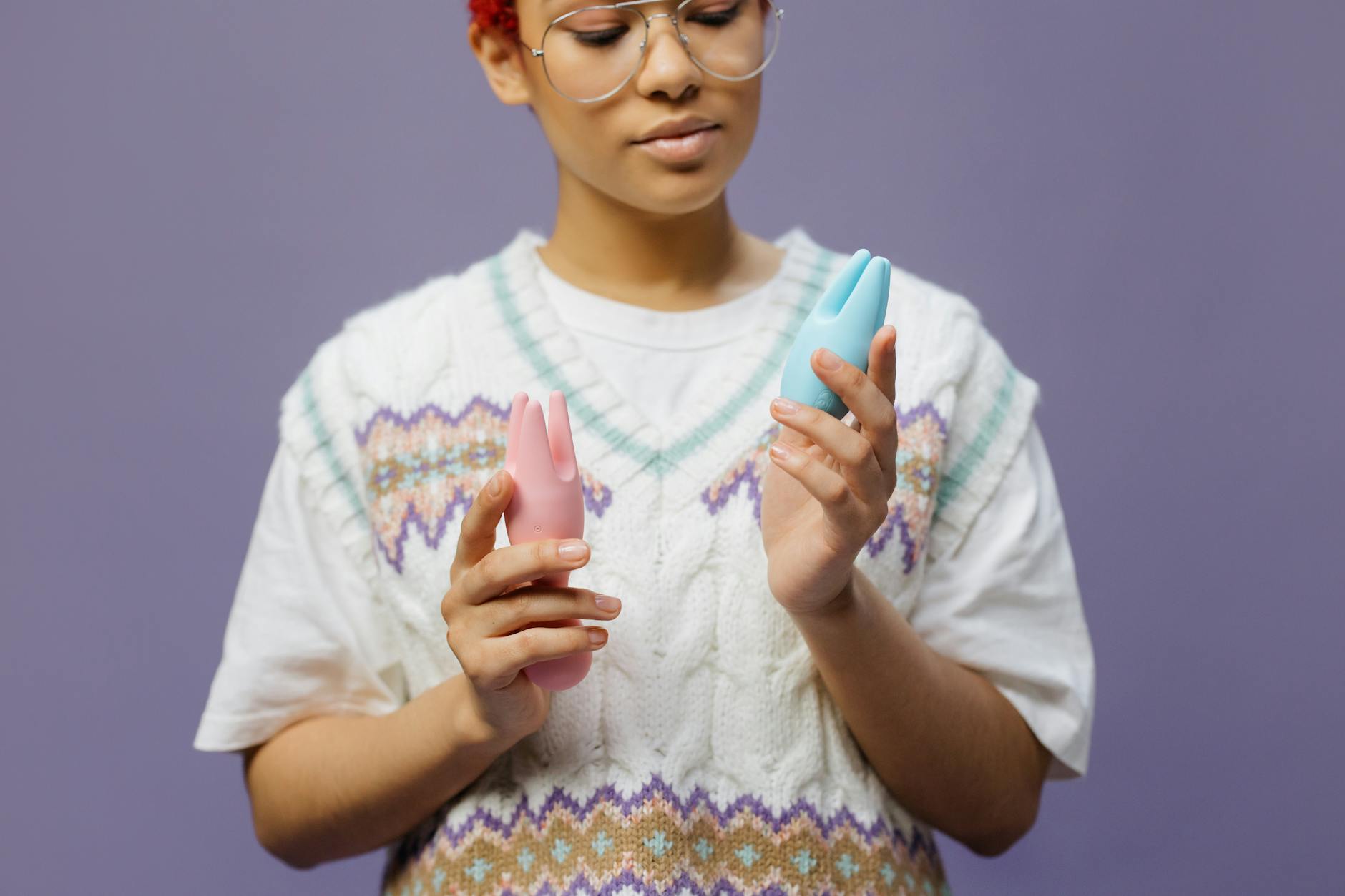
The conversation matters more than the toy. Here's how to introduce a clitoral vibrator into partnered sex without triggering insecurity, shame, or awkwardness.
You buy the lemon vibrator, you're excited, and you try to surprise your partner with it mid-sex. Or you awkwardly mention it once, they shut down, and you never bring it up again. Both approaches leave you less connected, not more. The toy isn't the problem. The conversation is.
I work with couples all the time who are stuck in exactly this place. One person wants to explore, the other feels threatened or confused, and instead of talking about what's actually happening, you both pretend the moment didn't exist. Nothing kills intimacy faster than unspoken resentment dressed up as "it's fine."
Here's the thing: introducing a clitoral vibrator with your partner is not about the vibrator. It's about vulnerability, desire, and whether you can actually talk about what turns you both on. That conversation is the whole point.
Most people assume their partner will feel replaced or emasculated by a toy. Sometimes that's true. But usually, the real fear is simpler and sadder: "Do I not do it for you anymore? Are you leaving me for a lemon-shaped piece of silicone?"
That fear makes sense. Sex is one of the last places where we feel like we have to be enough as we are. We're conditioned to believe that good sex happens because of our body, our skill, our presence. When a partner wants to add something external, it can feel like a referendum on your adequacy.
It isn't. But it will feel that way unless you name it directly.
The second unspoken fear is about your own pleasure. If you're the person wanting the vibrator, you might be nervous about admitting that what you've been doing for years isn't quite hitting the mark. That's not criticism of your partner. That's data about your own body, which is always changing and worth exploring.
Honestly though, timing and framing make all the difference. Don't start this conversation during foreplay or in bed. That's like trying to negotiate a work contract while standing in the kitchen at a dinner party. Save it for a calm moment, maybe after you've both eaten, when you're not half-naked and triggered.
Open with context, not the toy. Here's a real opening line I've heard work well: "I've been thinking about what makes me feel good, and I want to explore that with you. Not instead of you. With you."
Notice what that does. It centers your pleasure, your curiosity, and your desire to include them. It's not "I want to buy something because you're not enough." It's "I want to know myself better, and I want you there."
Let them respond. Actually let them respond, without defending or explaining more. If they get quiet, sit with it. If they ask questions, answer honestly. If they get a little jealous or weird, that's information. That's what you're here to understand.
Then explain what you're actually curious about. Maybe it's that you want to know what an air-suction lemon vibrator feels like. Maybe you've read that clitoral vibrators and partnered touch can feel amazing together, and you want to try it. Maybe orgasm has been harder to reach lately, and you want more options. All of that is true. All of that is legitimate.
If your partner is hesitant, here's what actually helps: showing them that you're not trying to escape them, you're trying to include them.
That might sound like: "I was thinking we could try it together. I could show you what feels good, and you could be part of that. It's not a solo thing." Or: "I read that couples who use toys together report feeling more connected, not less. I want to find out if that's true for us."
You could also offer a small olive branch: "How would you feel if we started by me exploring it alone, and then maybe we try it together if I like it?" Some partners need a little runway to get curious instead of defensive.
What you shouldn't do is minimize the toy or pretend it doesn't matter. Dishonesty lands worse than honesty every time. If you really want to explore a lemon clitoral vibrator and your partner doesn't, that's a real disagreement that needs a real solution. "It's no big deal" when it clearly is big to you just breeds resentment.
Start slow. Not slow in the physical sense, slow in the logistical sense. You're not going to go from "we just talked about this" to full integration in one night.
Maybe the first time you use it, your partner just watches. They're present, you're exploring, and there's no pressure for them to do anything except be there. That alone is intimate.
Next time, they might touch you while you use it. Or you might use it on them. Or you both decide it's not your thing and you laugh about it and move on. All of those outcomes are fine.
The key is that you're learning about each other's bodies and desires together, which is the whole point of partnered sex anyway. A lemon vibrator is just a tool that makes that exploration easier.
Some people feel weird watching their partner use a vibrator. That's normal. Some people feel weird using one in front of their partner. Also normal. Some people feel weird that they feel weird, which creates a whole extra layer of weirdness.
Here's the move: name it. "This feels a little awkward right now, and I think that's okay. We're doing something new." That simple sentence dissolves about half the weird.
If the awkwardness lingers, slow down again. You don't have to figure out your whole new sex life in one night. Sometimes the sexiest thing you can do is say: "I love you. I like exploring this with you. Let's come back to it when it feels easier."
Here's what I see most often when couples move past the conversation and into actual exploration: sex gets better. Not because the vibrator is magic, but because you had to get honest about desire, and honesty is hot.
You learned that your partner was willing to be vulnerable. They learned that you were willing to ask for what you actually want. You both learned that pleasure is collaborative, not competitive. And you probably discovered that using a lemon vibrator together feels way different than using one alone.
Some couples find that partnered touch plus the vibrator creates an intensity they've never experienced. Some find that it gives them more options when energy is low or bodies are tired. Some find that it's not their thing, but at least they know now, and they know together.
That last part is what matters. Shared knowledge beats secret longing every time.
Look, some people just aren't interested in toys. They're not interested in introducing new things into their sex life. And that's their boundary to have.
But there's a difference between "I'm not interested in vibrators" and "I don't want you to enjoy yourself fully." One is a preference. The other is a problem worth addressing with a therapist, because it's not really about the toy.
If you're partnered with someone who is openly hostile to your pleasure, who shames you for wanting to explore, who makes your desire feel like a betrayal, that's information about the relationship itself. The lemon vibrator didn't break anything. It just revealed what was already there.
If your partner is hesitant but not hostile, most of the time you can work through it with patience and conversation. People soften when they feel heard. When you make it clear that this isn't about them being inadequate, that it's about you knowing yourself better, most good partners will come around.
Not if you frame it clearly as something you're exploring together. Vibrators and partnered touch are different things. They don't do the same job. A lemon clitoral vibrator stimulates in a specific way. Your partner's touch, attention, and presence do something else entirely. They can absolutely coexist. The couples who struggle are usually the ones who didn't talk about it first.
That's extremely common. Some people feel more vulnerable when their partner is controlling the toy than when they're using it themselves. You can ask your partner to hold it at a certain angle while you control the pressure. Or you can use it yourself while they touch you another way. There's no right way. The point is communicating what feels good and what doesn't.
Yes. A good clitoral vibrator can actually help because the stimulation is consistent and targeted. But the conversation becomes even more important, because there's already pressure around orgasm, and adding a toy can amplify that if you're not careful. Talk about what success means. Maybe it's not "have an orgasm" but "enjoy the sensation." Maybe it's "feel less self-conscious about your body." Define that together first.
Yes. Using a vibrator doesn't affect fertility. Some couples find that vibrators actually help because they increase pleasure and orgasm, which can feel good and connective when you're in the more functional headspace of trying to conceive. Just make sure you're not using it as a substitute for actually being together.
Start with curiosity, not demand. "I read something interesting about this and I've been thinking about it" is a gentler opener than "I want to buy this." Give them space to respond. If they're not into it, you might ask why. Sometimes the barrier is just unfamiliarity, not actual resistance. Sometimes it's deeper. Either way, you'll know where they stand. That's worth knowing.
That guilt usually isn't about the toy. It's about internalized shame around your own pleasure, or messaging you received that good sex should happen a certain way. A lemon vibrator doesn't create that shame. It just brings it to the surface where you can actually look at it. That's not a reason to avoid the vibrator. That's a reason to maybe talk to someone about where that shame lives.
Introducing a clitoral vibrator into your partnership isn't about the toy itself. It's about whether you can talk about desire, whether you can ask for what you want, and whether your partner can hear that without making it about them. Those conversations are the foundation of good sex. The vibrator is just the conversation starter.
If you want to explore this with your partner, start with honesty. Tell them what you're curious about and why. Listen to what they're actually worried about underneath the words. And then decide together whether this is something you want to try. That willingness to be vulnerable and collaborative, that's what changes everything.