When erectile difficulty shows up in a relationship, most couples make a single terrible assumption: that penetration is the only path to real intimacy. It isn't. In fact, the couples who recover the most pleasure after erectile difficulty are the ones who stopped treating it like a problem to solve and started treating it like an invitation to explore.
A lemon vibrator does something important here. It shifts the entire equation. Instead of sex being about whether penetration happens, it becomes about mutual pleasure, sensation, and presence. And honestly, that's better.
Erectile difficulty is wildly common and rarely about attraction or love. It's usually one or more of these: stress, blood pressure medication, anxiety about performance itself, or just the reality that arousal works differently at different life stages. Sometimes it's a combination.
Here's the thing nobody tells you: the more pressure there is for an erection to happen, the less likely it becomes. Performance anxiety creates a feedback loop. And the longer that loop runs, the more your partner can start internalizing it as "my body is broken" or "my partner isn't attracted to me." Neither is usually true.
That's where a shift in approach helps. When you're not banking everything on one type of stimulation, you remove the pressure. Your partner's nervous system relaxes. Yours does too. And pleasure actually becomes accessible again.
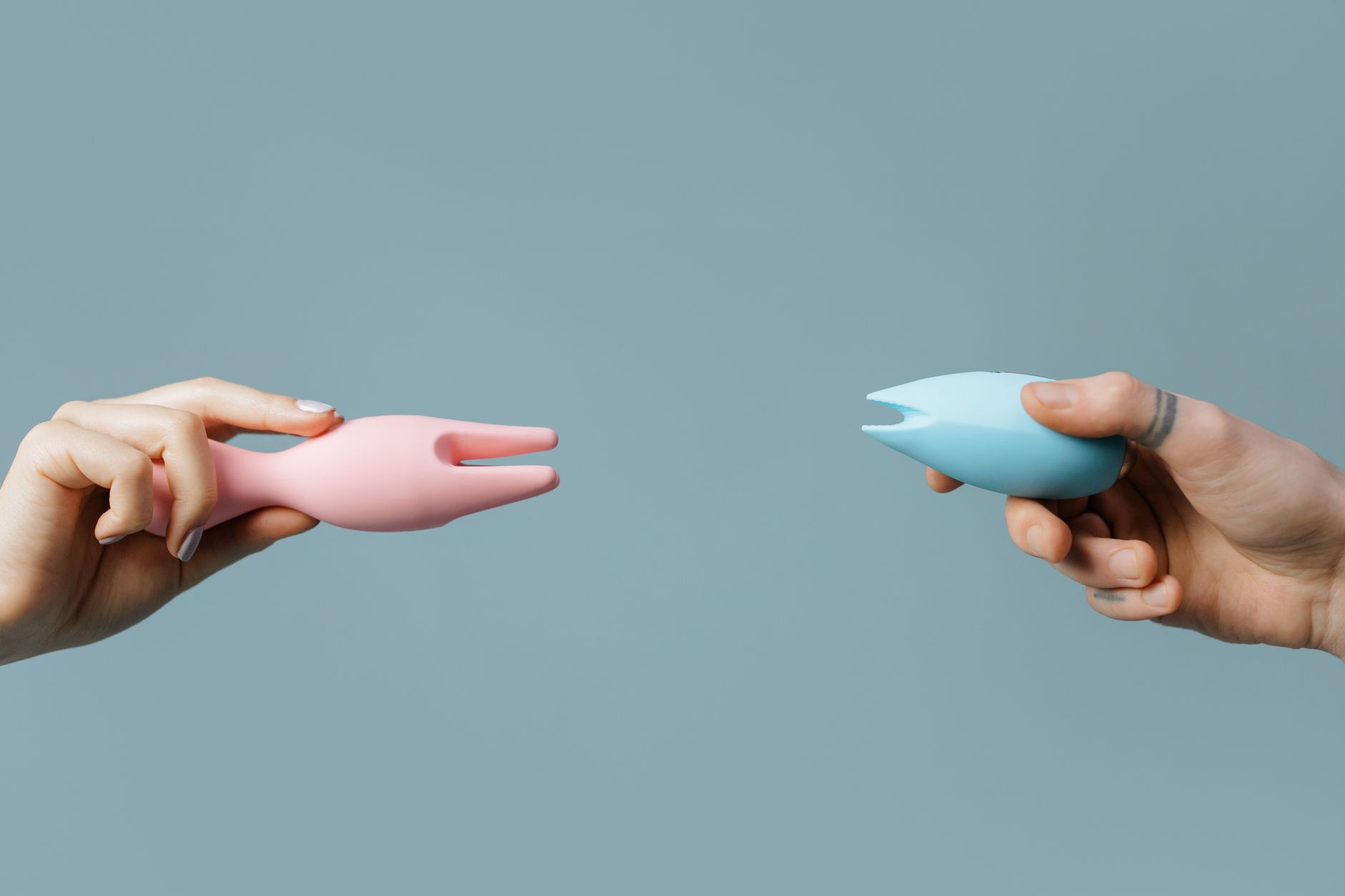
A clitoral vibrator like The Lemon does three things simultaneously:
First, it moves focus off penetration and onto mutual sensation. Instead of the rhythm and pressure depending on your partner's erection, you're both exploring what feels good independently. That sounds simple, but it's powerful. There's no "failing" at this.
Second, it removes the "fix it" mentality from the bedroom. Lemon vibrators work through gentle suction and patterns that stimulate without requiring pressure or friction. You're not trying to make something happen. You're both just present with pleasure.
Third, it gives you something collaborative to explore. Many couples find that using a vibrator together actually deepens their attention to each other. You're paying attention to your partner's responses. They're paying attention to yours. It's intimate in a way that penetration alone often isn't.
Don't frame it as "we need to fix the sex." Frame it as curiosity. "I've been reading about how lemon clitoral vibrators work differently than other toys, and I'm genuinely curious to try this together. Would you want to?" That's it. No diagnosis, no pressure.
If your partner seems hesitant, name the real fear. It's usually one of these three: "Am I being replaced?" "Does this mean you're not satisfied with me?" Or "Is this saying something is wrong with me?" Address each directly. A vibrator is an addition, not a replacement. Your satisfaction matters independently of your partner's abilities. And erectile difficulty is a body thing, not a character thing.
Bring The Lemon into the experience without making it The Main Event. Maybe you're touching each other, and at some point, you introduce it. Low intensity, relaxed. This isn't a performance. It's play.
Start without penetration. That sounds counterintuitive, but it works. You're both just exploring sensation. Maybe your partner is inside you, maybe they're not. The point is: the pressure to perform is gone.
Use the lower intensity settings on The Lemon first. This isn't about racing to orgasm. It's about your nervous system learning that pleasure is available, that it doesn't depend on one specific body function, and that there's time.
Here's what I see in my practice over and over: when couples slow down and introduce a clitoral vibrator into foreplay, your partner often gets hard naturally. Not because they're trying. Because the pressure is off and pleasure is actually happening. You're not chasing it anymore.
The pattern I usually recommend: 15-20 minutes of touch and sensation exploration together. Then introduce the vibrator at pattern 2 or 3 on The Lemon. Just feel it together. No timeline. Your partner can enter you when and if it feels right. If it doesn't, that's fine too. Orgasm isn't the only endpoint.
Your orgasms often become more reliable. The clitoral suction on a lemon vibrator is specifically designed to work without requiring penetration. That means you're not waiting for your partner's body to cooperate. Your pleasure is yours.
Your partner's anxiety often drops dramatically. Because they're not responsible for your pleasure anymore. They're part of it, but they're not carrying all of it. That's genuinely freeing.
The whole experience becomes less goal-focused. You're not having sex "to" something. You're just having sex. And the difference in depth and presence is real.
If erectile difficulty is new and persistent, your partner should see a doctor. Not because it's shameful, but because sometimes it's a sign of something medical that's fixable. Cardiovascular stuff, hormone levels, medication side effects. A good GP can rule those out quickly.
If the anxiety around it is intense, a sex therapist is worth the investment. They can help your partner separate performance pressure from pleasure in a way that's hard to do alone. Even just a few sessions can genuinely shift the dynamic.
If this is causing relationship tension beyond the bedroom, a couples therapist can help you both talk about what it means, how you're each internalizing it, and how to rebuild trust. That matters more than the erectile difficulty itself, honestly.
When you introduce a lemon clitoral vibrator into partnered sex with erectile difficulty, you're not fixing a problem. You're redefining what sex is. It becomes less about one person performing and more about both people exploring sensation together. Less about goals and more about presence.
Many couples tell me that after navigating erectile difficulty this way, their sex is actually better than before. Not because the difficulty disappeared necessarily, but because the pressure did. And pleasure thrives in the absence of pressure.
Your partnership is not broken. Your body isn't broken. You're just moving toward something more collaborative and honest.
Absolutely. In fact, this is one of the most useful applications. Many partners find that having clitoral stimulation happening simultaneously takes the pressure off penetration itself. You're getting pleasure from multiple sources. If your partner is inside you, great. If they're not, you're still experiencing sensation and intimacy. The vibrator becomes a bridge rather than a replacement.
Only if you frame it that way. If you introduce it as "I want to explore this together" rather than "your body isn't enough," most partners feel genuinely relieved. You're essentially saying: I want my pleasure, and I'm taking responsibility for it. That's actually attractive and empowering. Many people find that their partner feels less pressure after a vibrator enters the picture, which sometimes helps erectile function return naturally.
That's worth a conversation, not a negotiation. Ask what the resistance is about. Is it feeling replaced? Is it shame about their own body? Is it just unfamiliar? Understanding the root often helps. You might also say: "This isn't about you. This is about me exploring my own pleasure. I'd love to do it with you, but I'm going to do it regardless." Your pleasure matters independent of your partner's comfort level, though ideally you're moving toward something that works for both of you.
No. In fact, many couples find that once the pressure is off and pleasure is actually happening, erectile function improves naturally. But that's not the goal. The goal is pleasure itself, not erection. If your partner experiences reliable erections again, great. If not, you've still got a rich sex life happening. That's a win.
That depends entirely on the cause and the pressure level. If it's stress-related and you remove the pressure, sometimes it shifts in weeks. If it's medical, treatment can help quickly. If it's deeply entangled with relationship tension or body image, it might take longer and benefit from a therapist. But "normal" isn't the goal. Pleasure and presence are. Those are available right now.
Yes. There's no such thing as becoming dependent on a vibrator. Your body doesn't stop responding to touch because a vibrator is part of your routine. In fact, many couples integrate The Lemon into every session and find that sex becomes more reliable, more pleasurable, and less anxious. Use it as much as it feels good.
Erectile difficulty in a partnership doesn't have to be a crisis. It can actually become an invitation to build intimacy differently, with less performance pressure and more genuine connection. A lemon vibrator is a tool for that reframing. When you shift from "we need to make this work" to "let's explore what feels good," everything changes. Your partner's body changes too. Pleasure becomes something you both have access to, independently and together. That's not a compromise. That's actually better than what came before.