Using a Lemon Vibrator When One Partner Wants Sex More Often
Mismatched desire kills more relationships than infidelity. Here's how a lemon clitoral vibrator becomes the bridge between two people who love each other but want different things.
Mismatched desire is not a sign your relationship is broken. It's the most common complaint I hear in my practice, and it's also the one that breaks up couples who are otherwise deeply connected. One person wants sex twice a week. The other wants it twice a month. Both feel rejected. Both feel pressured. Both feel like the other is using them or withholding from them. That gap is real, and it hurts.
Here's what I've learned: a lemon vibrator doesn't solve mismatched desire, but it does change the conversation. It transforms the situation from binary (sex or no sex) into something more flexible. Your higher-desire partner can get pleasure without putting pressure on the lower-desire one. And the lower-desire partner often finds they're interested again when there's no expectation attached.
Desire works differently for different people. Some people have responsive desire, meaning arousal builds once sex starts. Others have spontaneous desire, the kind that hits like a lightning bolt. Some people's desire is tied to emotional connection. Others' is tied to physical touch, or novelty, or feeling attractive.
Add in life variables. One partner has a high-stress job and comes home flattened. The other had a low-stress day and wants to reconnect. One partner has been touched by kids all day and feels touched-out. The other has been in meetings alone and is craving physical contact. One partner is on an antidepressant that lowers libido. The other isn't. One partner is 38 and perimenopause is starting. The other is 40 and feels more sexual than ever.
None of this is about love. None of it means someone's broken. It just means you're two different humans with two different bodies and two different nervous systems. Accepting that is the first step.
When one partner has higher desire, they often end up in a painful position. They initiate. They get turned down. They initiate less to protect themselves from rejection. They resent their partner. Their partner feels guilty. Everyone feels trapped.
A lemon vibrator interrupts that cycle because it removes the other person from the equation. Your higher-desire partner can experience pleasure, orgasm, and satisfaction without needing anything from you except space and maybe, if you want, presence. That's not rejection. That's just a different form of intimacy.
For the lower-desire partner, it often removes the pressure that killed desire in the first place. When you're not constantly worried about disappointing someone, when sex is not always something that happens to you, when you're not the gatekeeper of your partner's sexual happiness, desire sometimes comes back. Not always. But often.
This has to happen outside the bedroom. Not during sex, not during a fight, not when you're both naked and vulnerable. Have this conversation over coffee or a walk, when you're both calm and clothed.
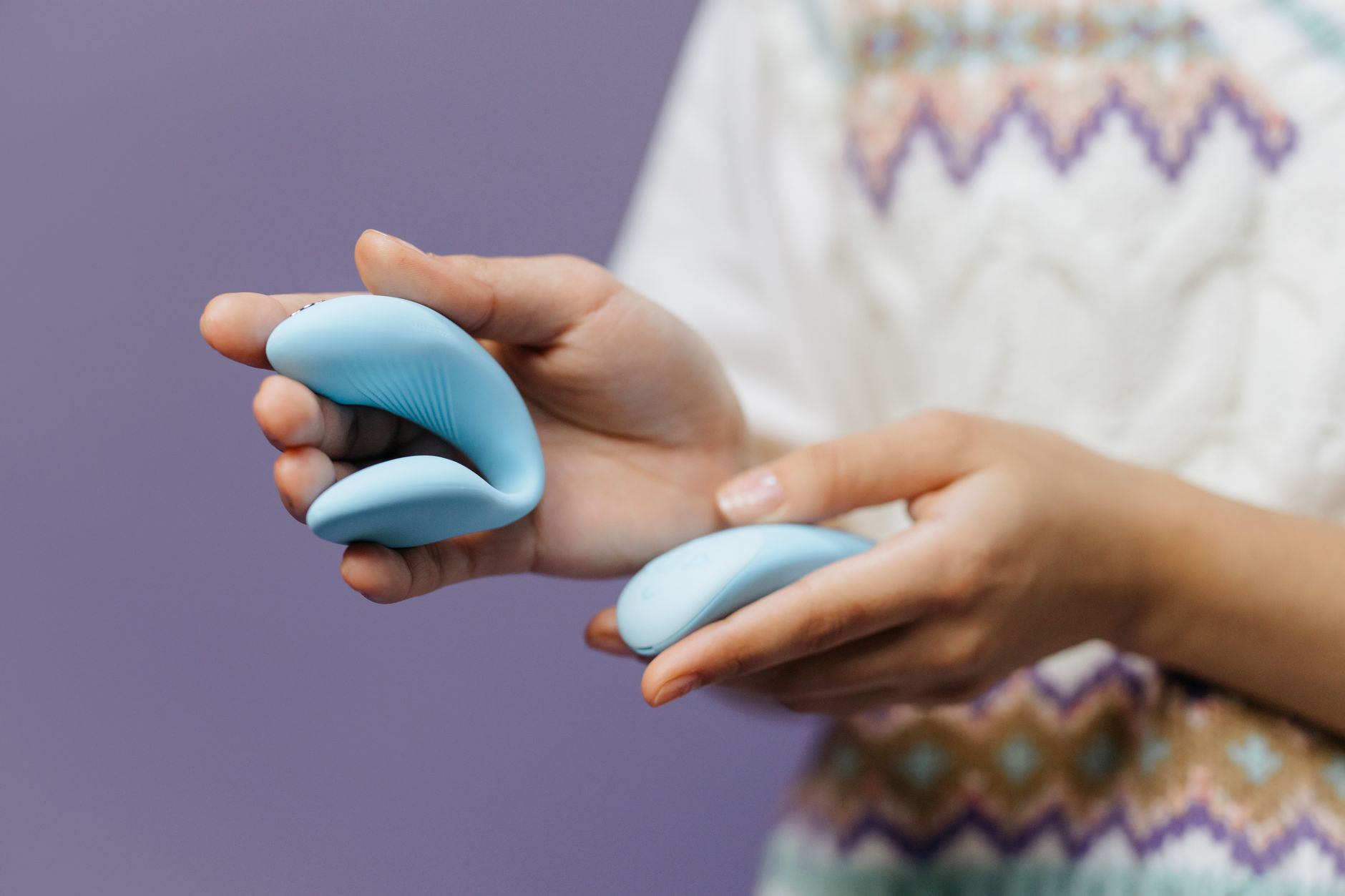
Start with curiosity, not blame. "I've been thinking about how we've been feeling disconnected lately, and I think the pressure around sex is making it worse for both of us. I found something I want to try together, and I want to know how you feel about it." Then show them. Don't describe it. Let them see what a lemon clitoral vibrator is. Let them hold it. Let them ask questions.
Frame it as something that helps both of you. For the higher-desire partner: "This lets me experience pleasure without needing you to be in the mood, so I'm not waiting for you or pressuring you." For the lower-desire partner: "This takes the pressure off me to perform, so I can actually enjoy sex when we do have it together." Both things are true.
Solo, with you nearby. Your higher-desire partner uses the lemon vibrator while you're in the room. You can read, work, talk, whatever. The key is that you're not absent, but you're also not obligated to perform. This is surprisingly intimate for a lot of couples because you're together without agenda.
As foreplay for both of you. They use it on themselves while you touch them elsewhere. Hands, mouth, your whole body can be involved. You're present and participating without the pressure of having to be aroused yourself. This often builds desire in the lower-desire partner because you're moving at their pace.
During partnered sex, for them. You're inside them or otherwise engaged, and they use the lemon vibrator on themselves for clitoral stimulation. This takes the pressure off you to provide everything and often makes their orgasm easier to reach, which makes sex feel less work for both of you.
During partnered sex, on them. You use the vibrator on your partner while you're inside them or touching them elsewhere. This is a way to add pleasure without adding pressure. You're actively participating in their pleasure without needing to be in any particular state of arousal yourself.
As a conversation starter. "I want to use this together tonight." "I'm going to use this alone in the next room; I'd love to know you're thinking of me." "Can you watch while I use this?" These sentences create anticipation and intention, which often naturally builds desire.
Desire is not just physical. It's also emotional. Most of the time, when mismatched desire is killing a relationship, it's because one person feels rejected and one person feels pressured. A lemon vibrator can ease that, but only if you also change the story you're telling yourself.
If you're the higher-desire partner, the story shift is: "My partner not wanting sex as much as me doesn't mean they don't want me." Using a vibrator together isn't settling. It's being creative and compassionate with someone you love.
If you're the lower-desire partner, the story shift is: "My partner's higher desire doesn't mean I'm broken or that I should perform." A lemon vibrator isn't a replacement for you. It's a way for your partner to take care of themselves so you're not responsible for their sexual happiness.
When both people stop treating mismatched desire as a problem to solve and start treating it as a variable to work with, the resentment usually drops. And when resentment drops, desire often comes back naturally.
I've worked with couples where both partners want sex every day, and they still felt disconnected. I've worked with couples where one wants it once a month and the other once a week, and they felt deeply bonded. The difference was never the frequency. It was always whether both people felt chosen, respected, and safe.
Using a lemon vibrator together doesn't guarantee anything except that you're having an explicit conversation about desire instead of letting it poison things silently. That conversation is where healing starts. The vibrator is just the permission slip to have it.
Don't introduce a lemon vibrator during a fight about sex. Don't surprise your partner with it during sex. Don't use it as a way to punish them or prove a point. This only works if both people choose it.
Set clear boundaries beforehand. Do you want to watch? Do you want to be touched while they use it? Do you want them to touch you? Do you want the room dark or lit? Do you want to talk about it afterward or keep it quiet? These conversations feel awkward and they're the most important ones you'll have.
Also: using a lemon vibrator is not a substitute for actually addressing desire differences. If one partner wants sex three times a week and the other wants it once a month, a vibrator helps bridge the gap, but you also need to talk about why the gap exists. Is someone depressed? Stressed? Angry? Touched out? Are you having sex in a way that feels good for both of you? Is there actual foreplay or is it rushed? A lot of low desire is actually "I don't enjoy the sex we're having," and a vibrator can't fix that alone.
Sometimes yes, sometimes no. What it reliably does is remove the pressure that was killing desire in the first place. When the lower-desire partner doesn't feel guilty or pressured, desire often comes back naturally. But that only works if you're also addressing the underlying reasons the desire dropped.
Then you need a different conversation. Their refusal might mean they're uncomfortable with vibrators in general, or they might mean something deeper. They might feel like it's a rejection of them. They might feel ashamed. They might just need time. Don't push. But do ask what they need to feel safe trying it.
Nope. Millions of couples do it. It feels weird the first time because you're breaking a script you didn't even know you were following. After that, it's just another tool for pleasure.
No. A vibrator doesn't do anything you do. It doesn't laugh at their jokes or remember their coffee order or know their history. It's a object that creates sensation. That's all. If you're feeling threatened, that's usually a sign something else is going on in the relationship that's worth exploring.
Completely okay. Their use of a vibrator doesn't obligate you to want sex more often. You're allowed to have your own desire level. But this is also worth talking about. If they're using a vibrator because they're frustrated with you, that's something to address. If they're using it just for their own pleasure and you're genuinely okay with that, then everyone wins.
Whatever you both agree on. There's no magic number. Some couples use it a few times a week. Some use it once a month. The frequency matters less than the fact that you both chose it and you're both getting something from it.
Mismatched desire doesn't mean your relationship is failing. It means you're human. And humans are creative enough to find ways to care for each other that don't require perfectly matching libidos. A lemon vibrator is one of those ways. But the real work is in the conversation. When both partners feel heard, respected, and safe, the pleasure usually follows.
If you're struggling with desire differences in your relationship, reach out to us. Sometimes it helps to talk it through with someone who's heard this story a hundred times before.